Chip War (by Chris Miller) - Part 2

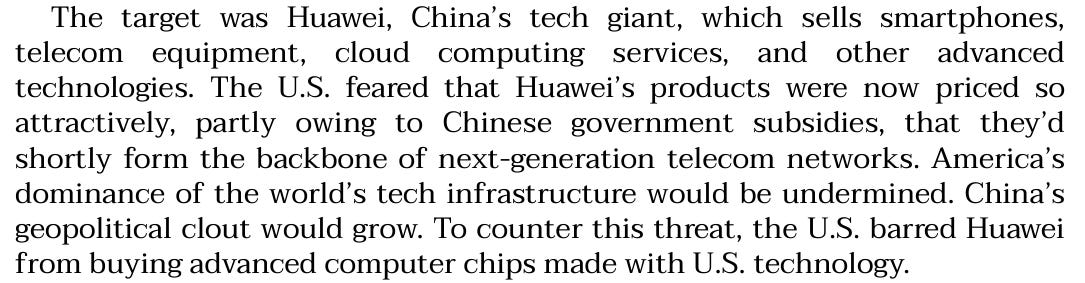
The US got bothered about Huawei, because it was subsidized, and was undercutting many advanced technologies where US leads. So the US just blocked chip access to Huawei:
As expected, at least in the short term, Huawei’s progress got throttled:

The Chinese leadership worries a lot of about their semiconductor capabilities:
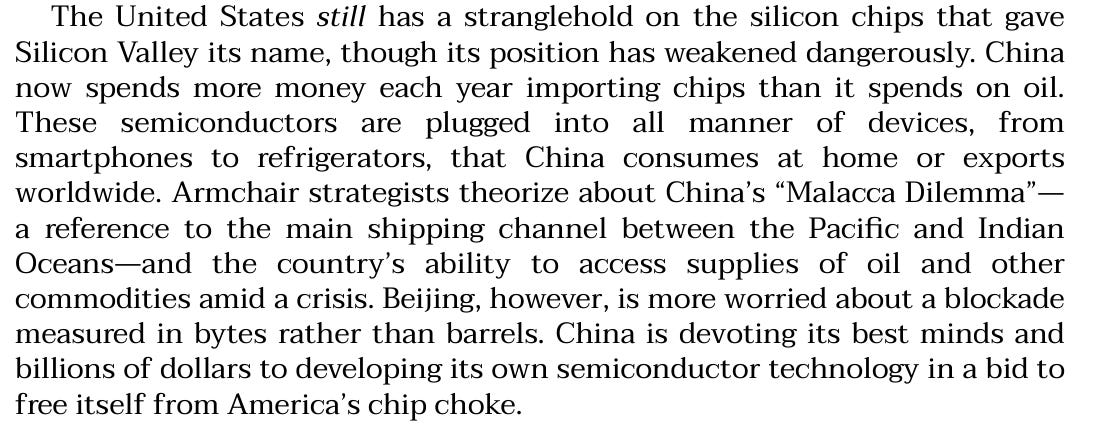
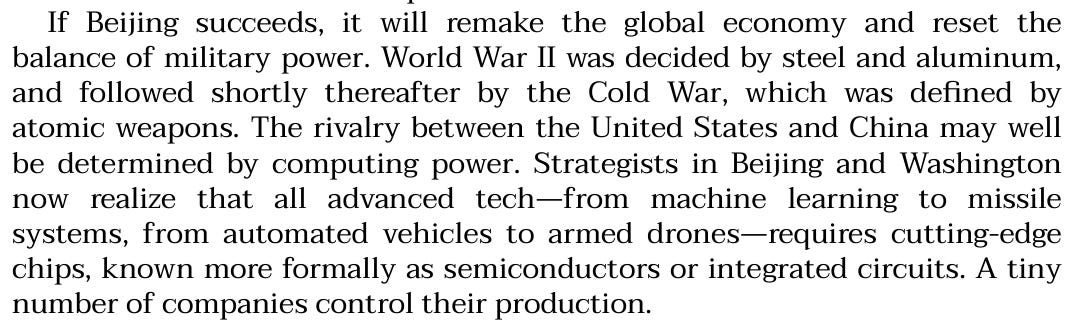
The fate of upcoming conflicts may well be fundamentally driven by competitiveness in computational aspects of a nation:
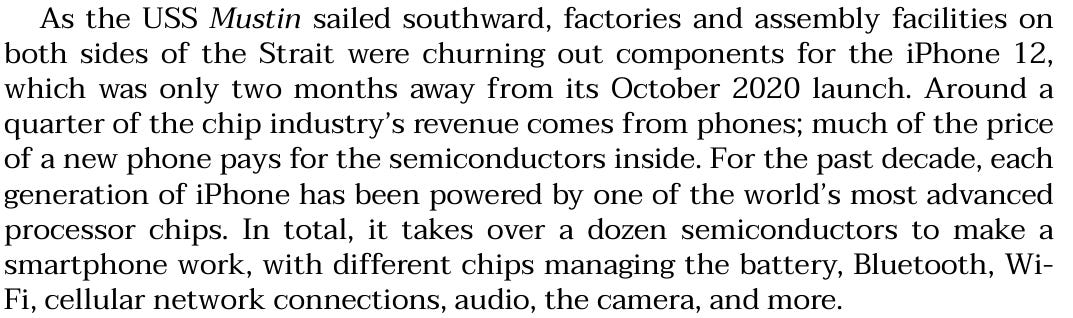
A phone essentially a collection of dozen odd chips. 25% of semiconductor market is generated by phones alone; and much of the money we pay for a phone goes to semiconductor companies.
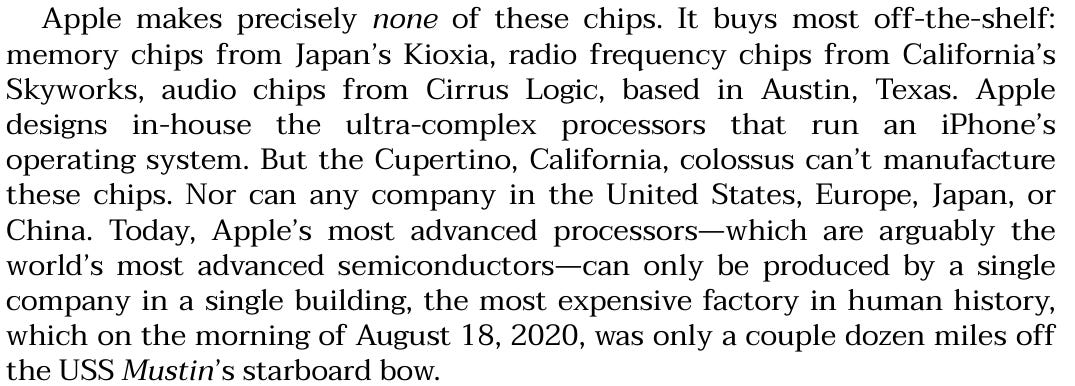
Apple iPhone obtains the various types of chips it needs from various vendors; but the core processor for phones can be produced by only one company at the scale and quality required:
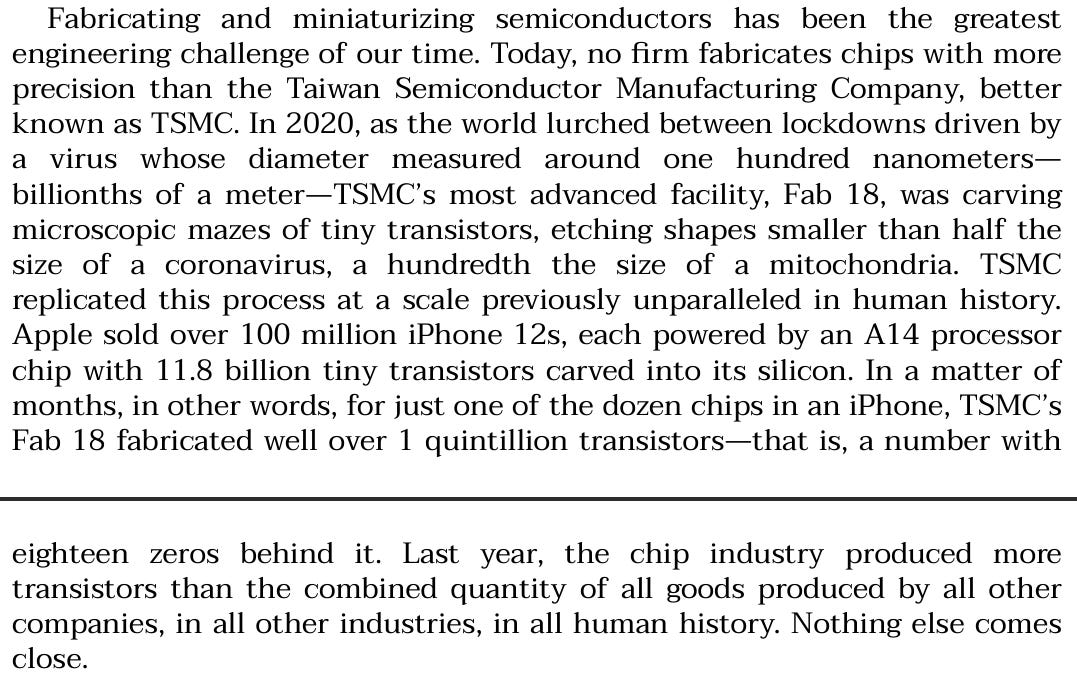
Coronavirus size ≈ 100 nanometers.
Modern transistor features are smaller than half a coronavirus.
They are about 1/100 the size of a mitochondrion.
100+ million iPhone 12s were sold.
Each A14 chip has ~11.8 billion transistors.
TSMC’s Fab 18 produced over 1 quintillion (10¹⁸) transistors for just one chip model.
The chip industry now produces more transistors per year than the total number of all other manufactured goods ever made in human history (comparative claim).
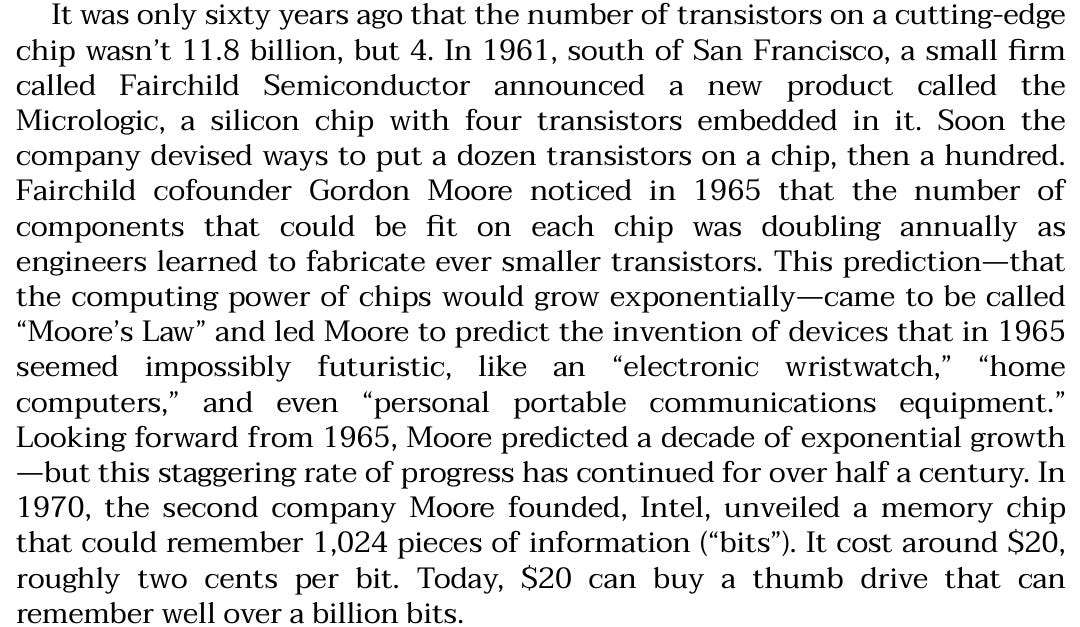
The first chip from Fairchild had 4 transistors in it. Present processors have 11.8 billion transistors in it. The growth follows the rule informally recognized as “Moore’s Law”