Developing Talent in Young People (by Benjamin Bloom) - Part 6


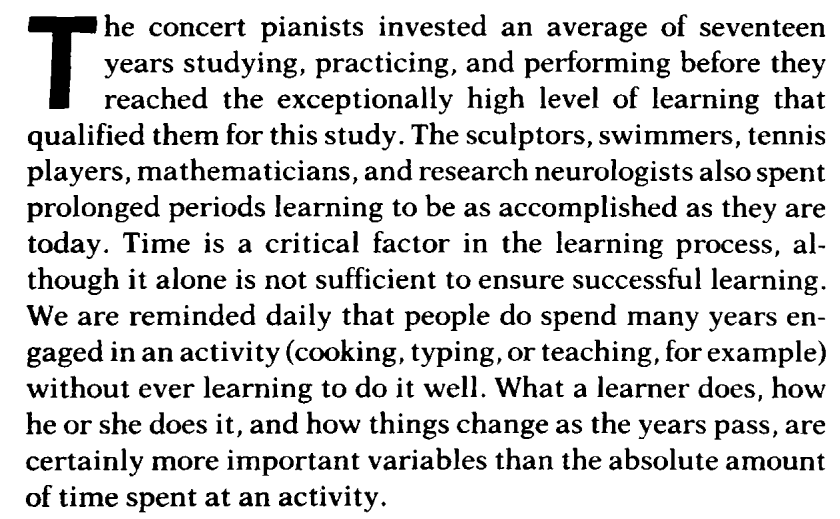
Time alone doesn’t ensure improvement; the specifics of their training matter for improvement:
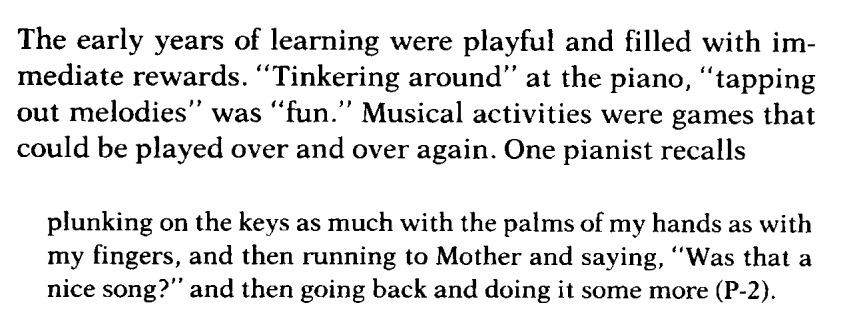
The first phase of learning towards mastery is characterized by “Play”:
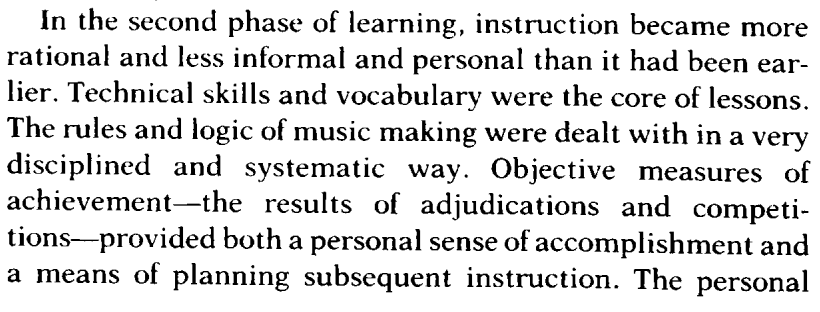
During the “play” stage, you need a “nice teacher”. That is someone more attuned to the personality of the learner, endowed with kindness and understanding at a personal level. As you develop - more serious and demanding teachers are needed:
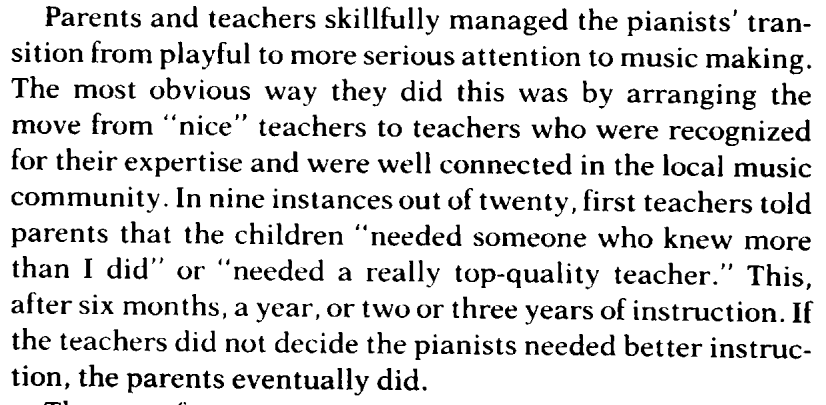
Easygoing → Serious transition is a step up in commitment to the craft:


The serious stage is characterized by “care”, avoiding mistakes and perfecting a detailed understanding of the subject matter:
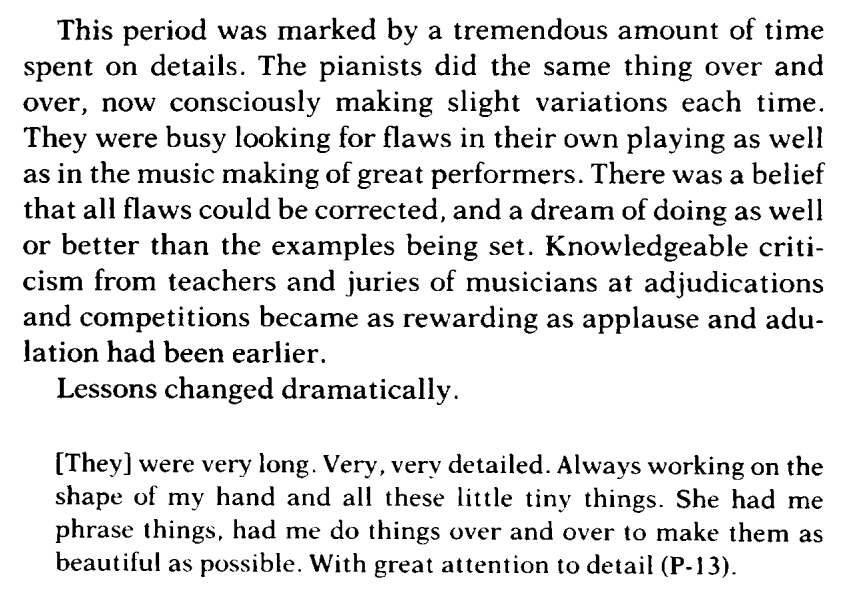
In stage 1 the teacher is “loved” more. In the second stage - the teacher is “respected” more:

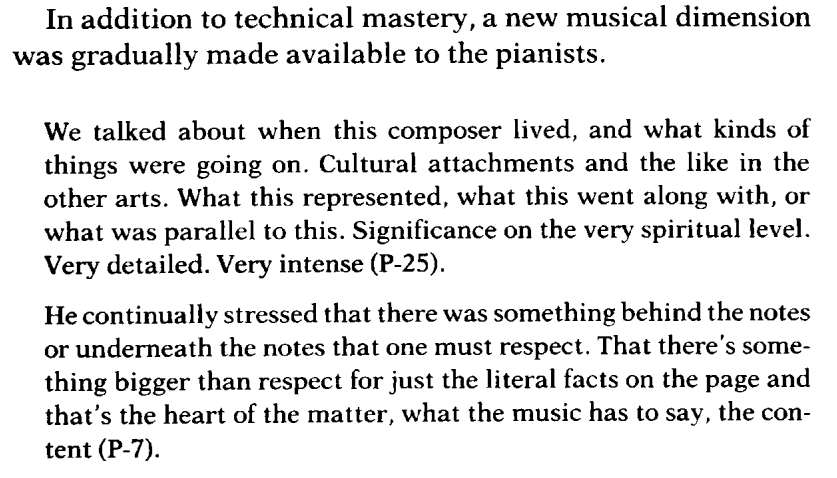
In the serious phase - one learns about the top practitioners of their field:
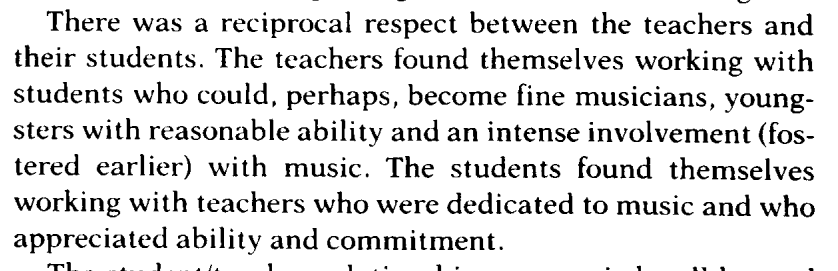
In the serious stage - both the teacher and student are committed to the practice; there is investment both ways:
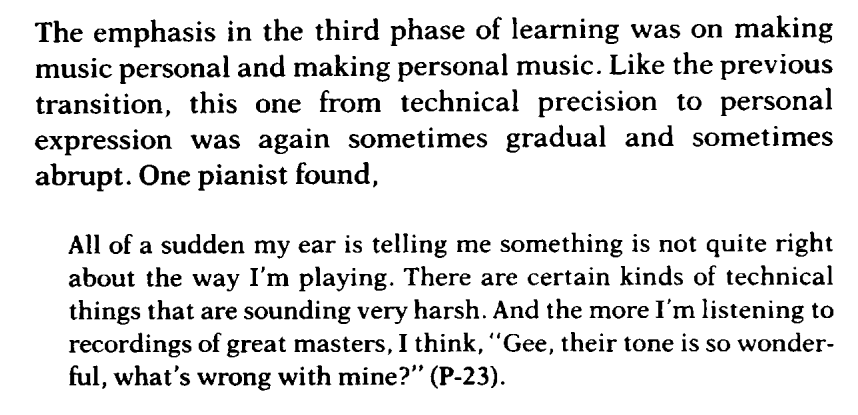
The third stage is “individualized creativity”. At this stage the focus is on making the art and craft one’s own and developing one’s own style:
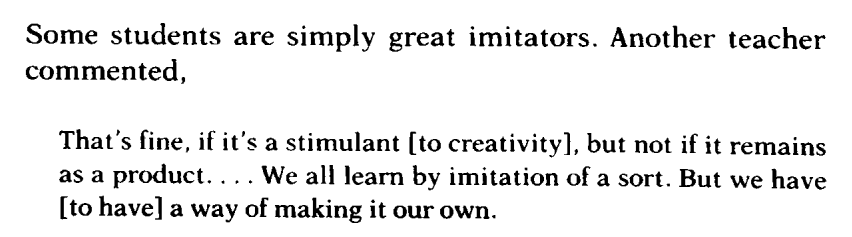
There is a big friction in moving from imitation to creation:
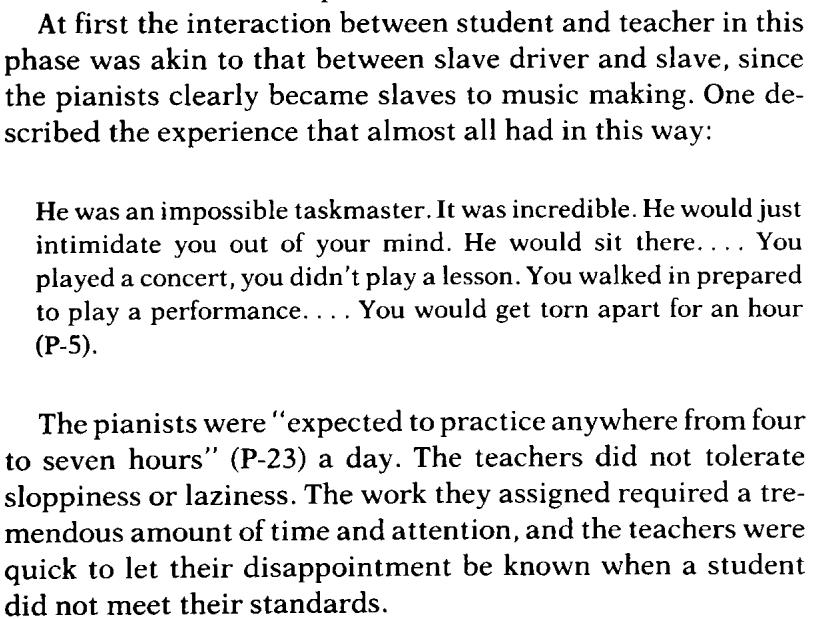
In Level 3 - the teachers become even tougher - they will drive the student very hard, to reach the highest standards possible:
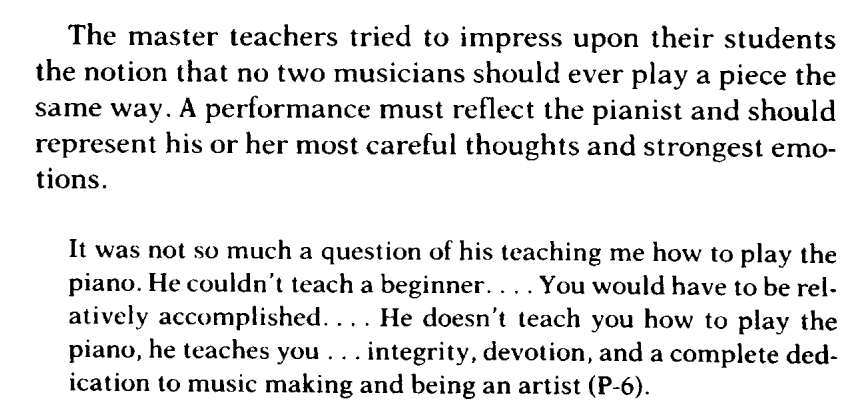
At the third level - there is encouragement to find one’s own style. No two musicians should play the same piece the same way. There must be something of the person infused in the performance:
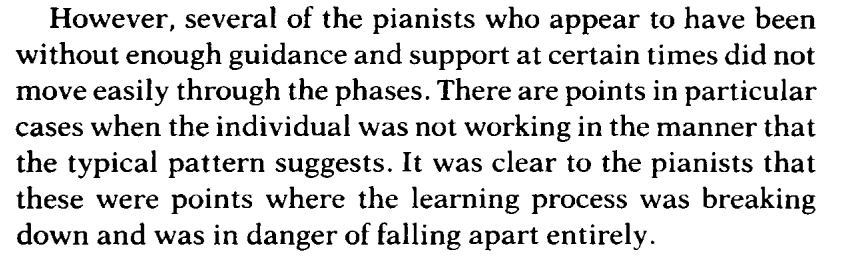
Without proper guidance - state transitions - from easy to serious, and serious to creativity is much harder, and the paths are more varied:
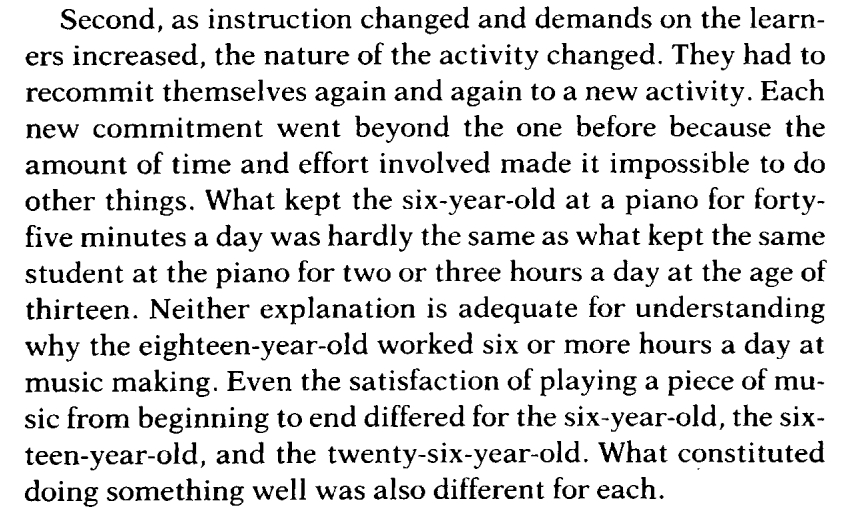
In learning - a constant recommitment to the activity is needed to succeed. It is like “renewing” your mobile carrier plan, but in learning, usually the time and intensity has to increase over time to make a real dent:
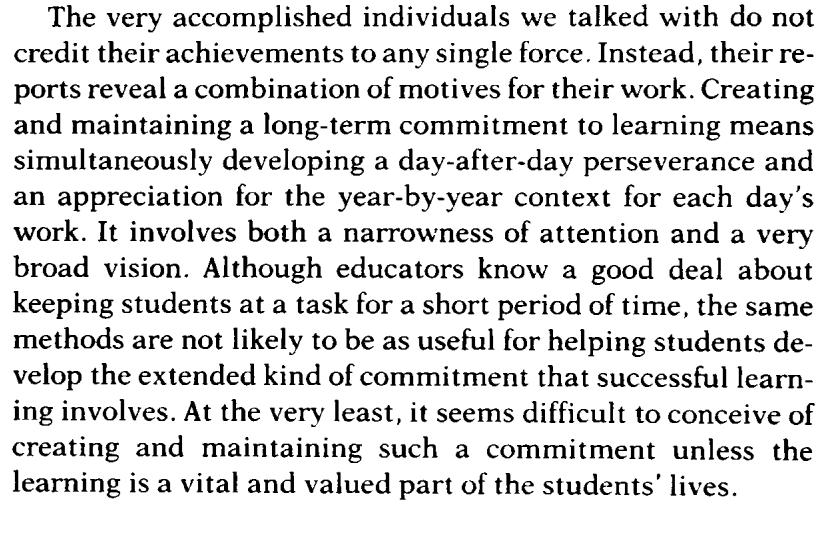
Commitment operates at two levels simultaneous - take care of the daily details - while also keeping a long-term vision of one’s activities:
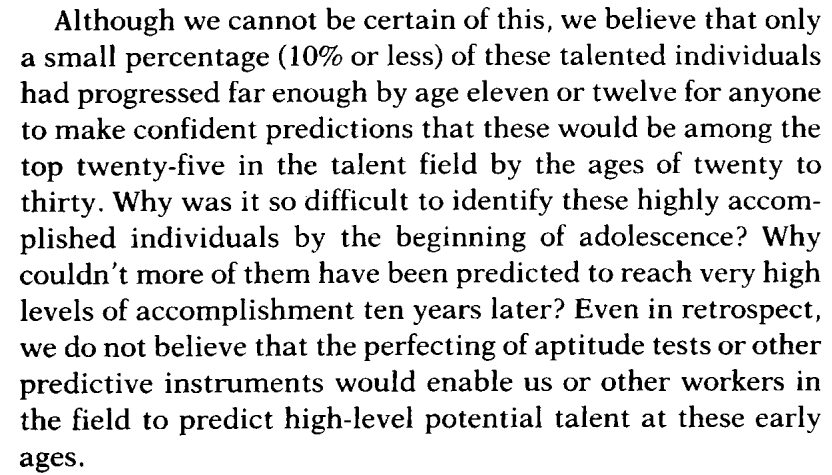
One of the most important points coming out of the book - at age or twelve, one couldn’t make a prediction of what will happen of a child. Inborn talent is not sufficient to predict what one may do. Talent development is the determining factor deciding whether great outcome is achieved or not in a person’s journey:
Many factors go into developing talent, and without these factors the human being will remain primitive with no or negligible capabilities within themselves:
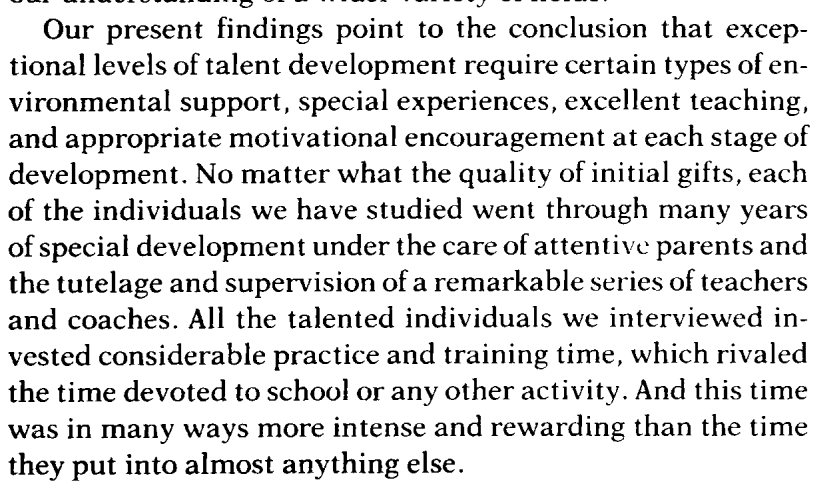
In general - these are required:
Strong interest
Emotional commitment
High aspiration
Relentless effort at improvement
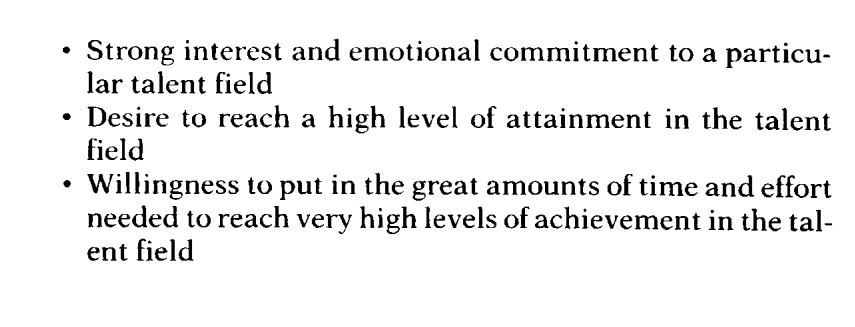
To reach the goal in a tolerable amount of time - the ability to learn rapidly and well is needed:
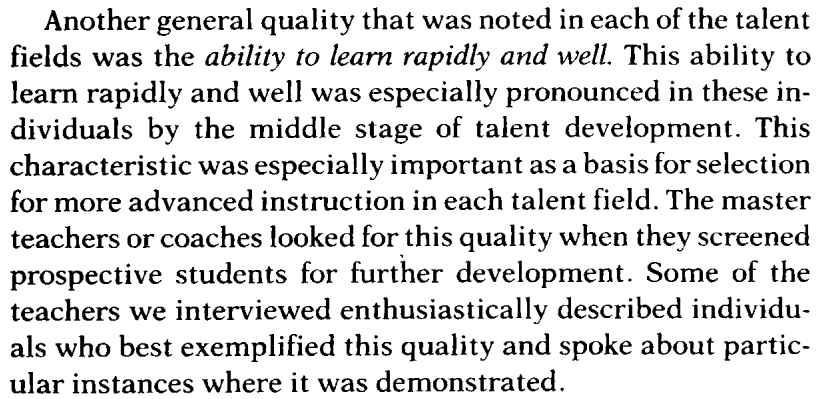
The ability to learn fast and well is connected to having a reservoir of prerequisites in one’s long term memory and system:
On top of the above general qualities and inclinations - each field makes its own special demands upon qualities:
There is vast human potential, and most of it goes to waste. With the right framework, environment, support and daily activity more of human talent can be unlocked in society: