
Developing Talent in Young People (by Benjamin Bloom) - Part 5


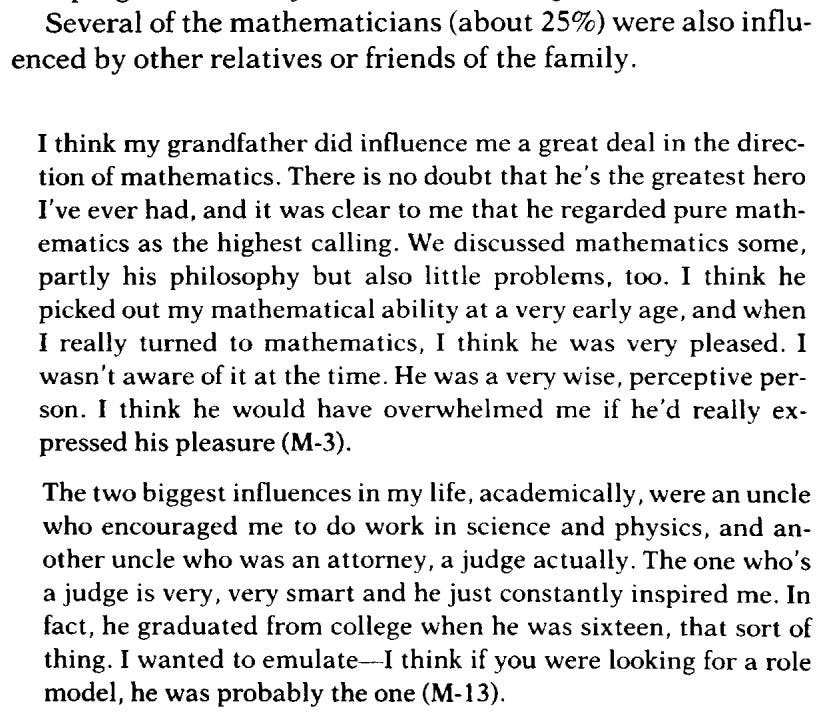
There was some strong influence in the extended family for the upcoming mathematician:
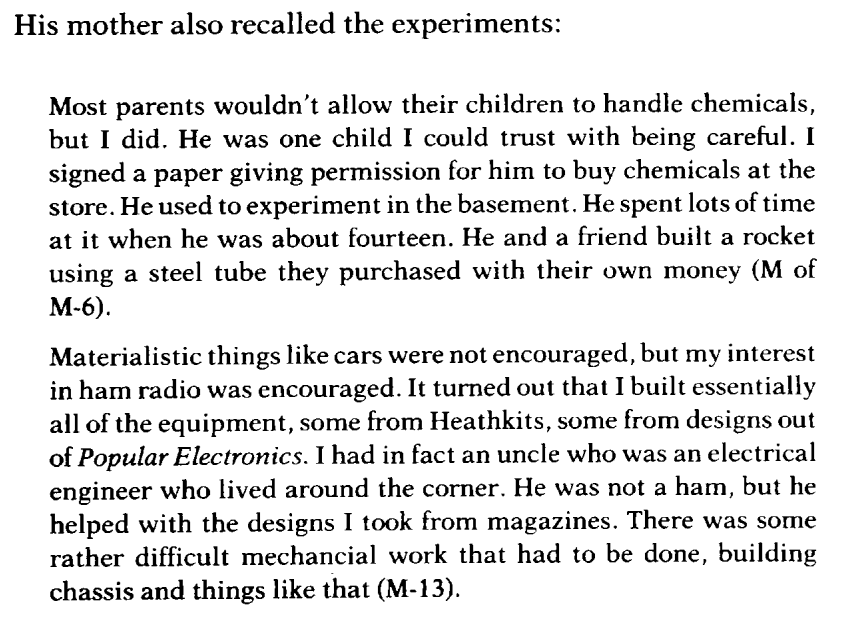
Even the parents recognized that the mathematicians were more careful and wise at younger ages and allowed them to carry out comparatively dangerous experiments on their own:
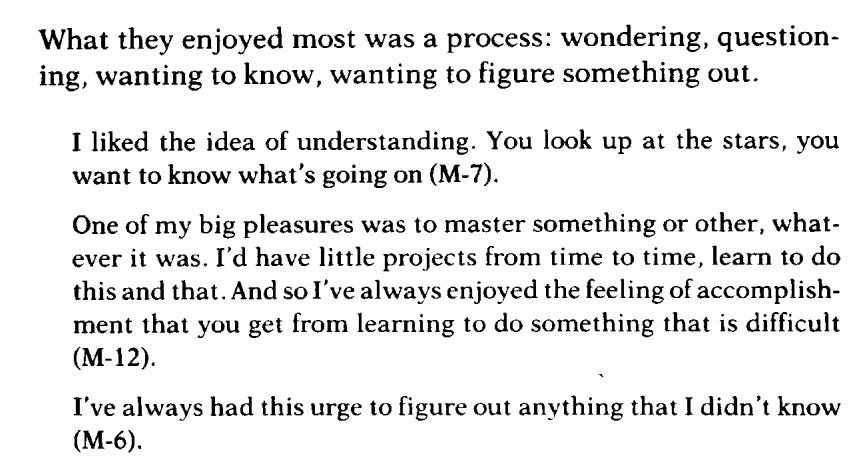
The main differentiator for mathematicians - is their love of the process of figuring things out. They were not attracted to experiments due to some superficial aspects - but the process of figuring out what they do not understand:
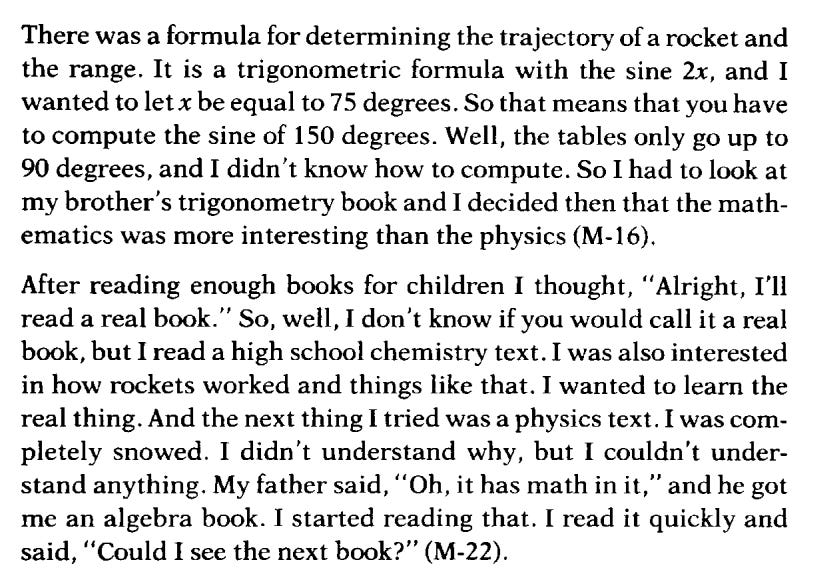
From their need to do physical experiments more intelligently they got to know mathematics, and then got hooked to it:
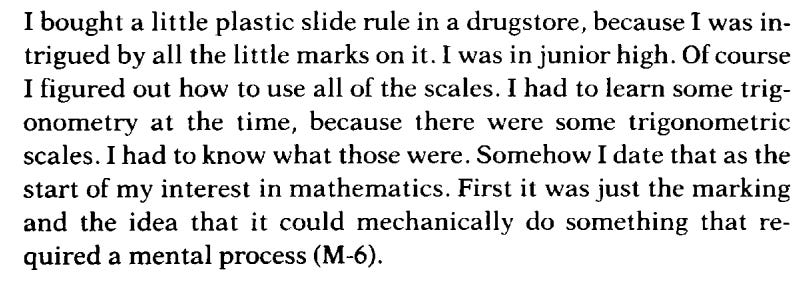
They would take challenges on their own - from their elders and so on - and solve problems for them:
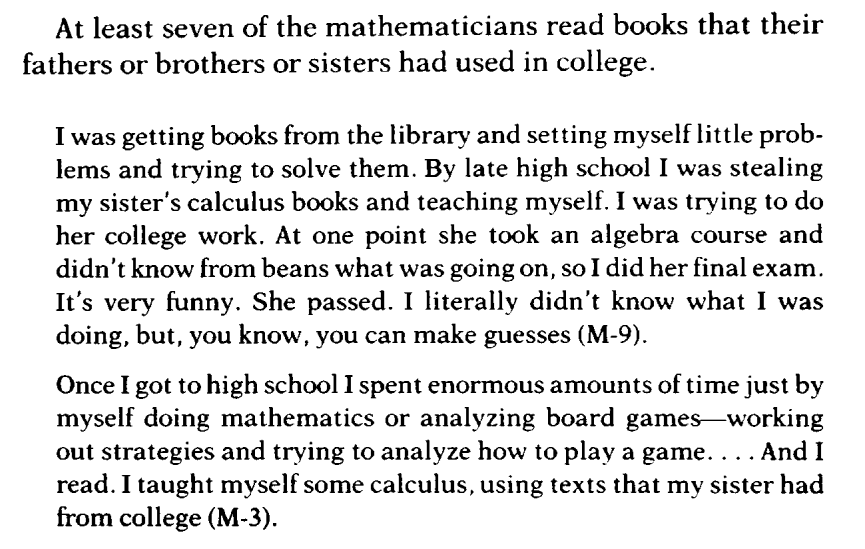
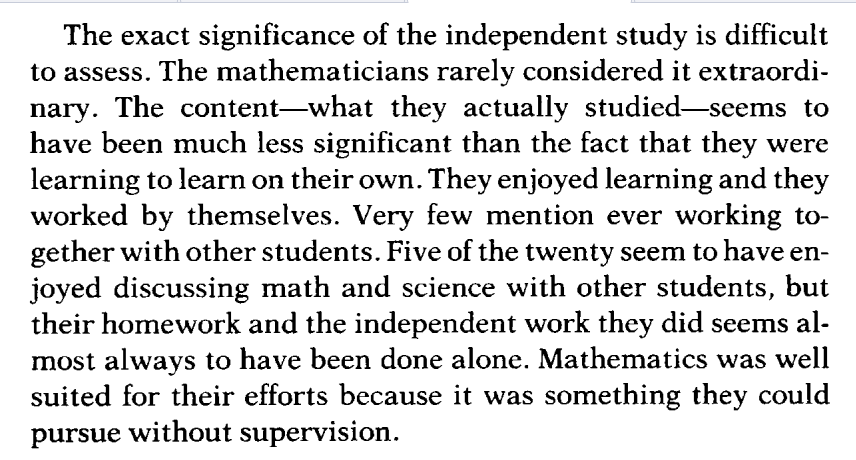
Mathematicians are almost always lone-wolf - they just teach themselves things:
They would check their own work and had a good sense of correctness:

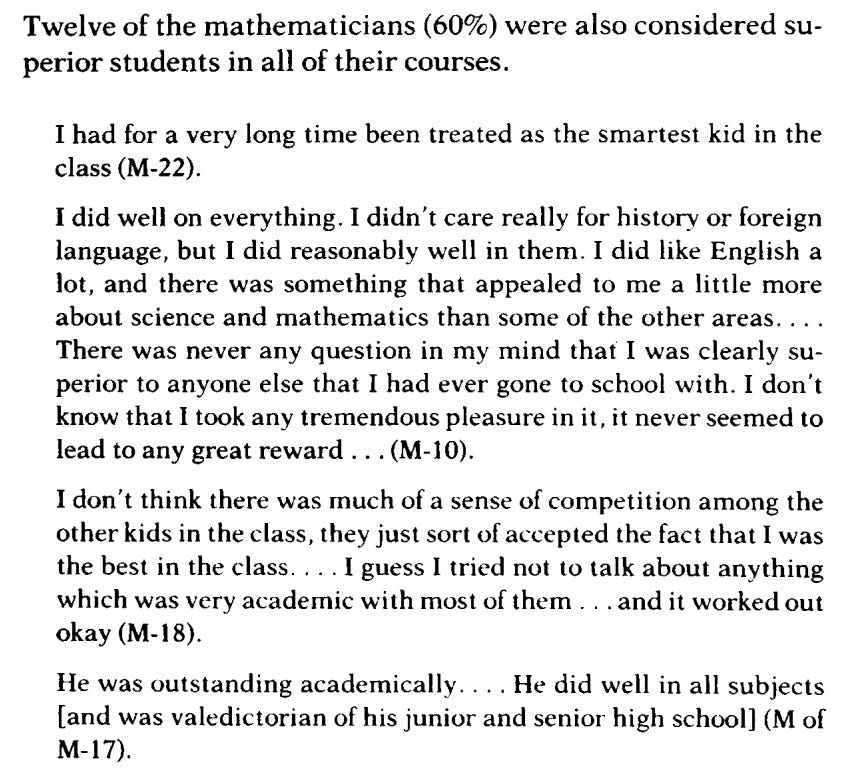
People recognized that they were very good academically - from the very beginning:
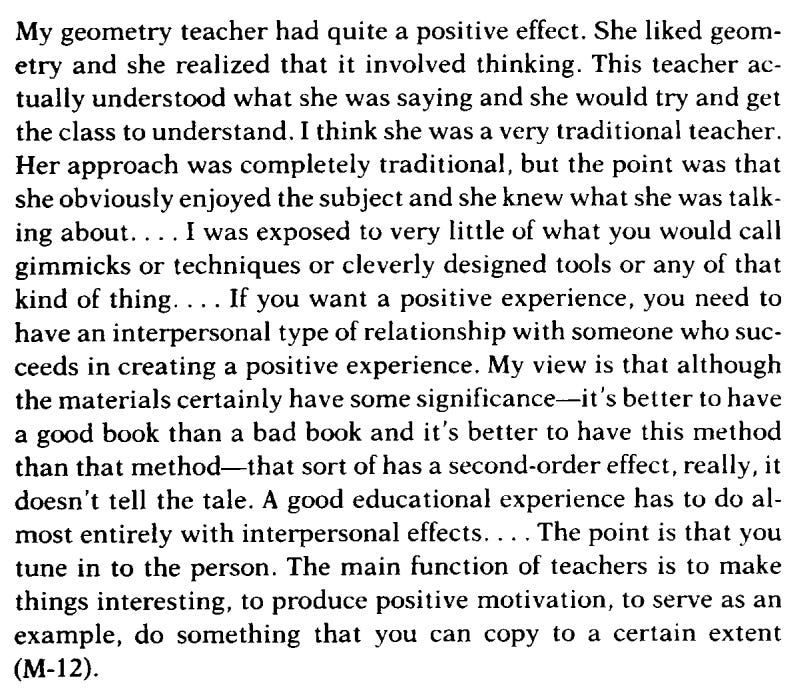
Mathematicians good recognize real expertise in teachers:
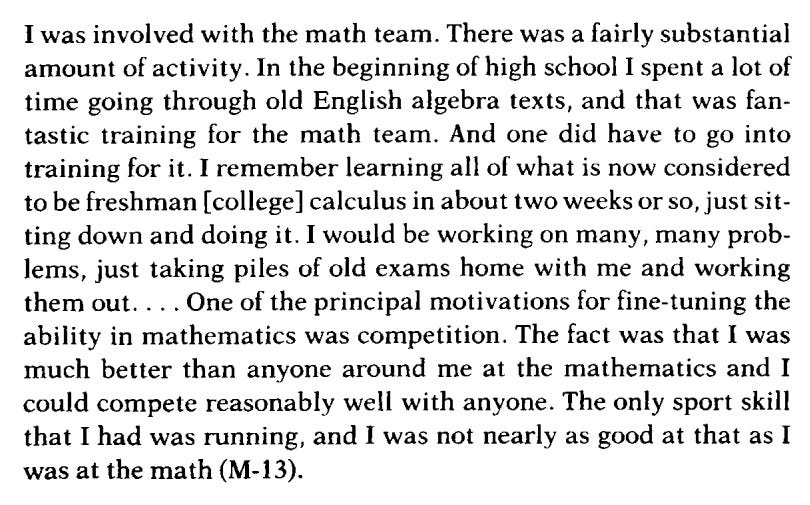
Some mathematicians got into their math teams:
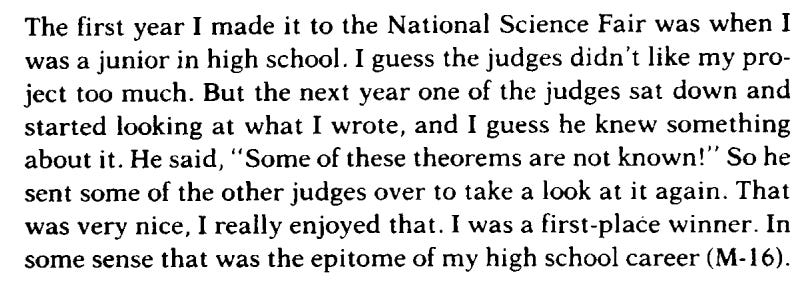
They came up with new theorems and finally got some people actually recognize it for what it was:
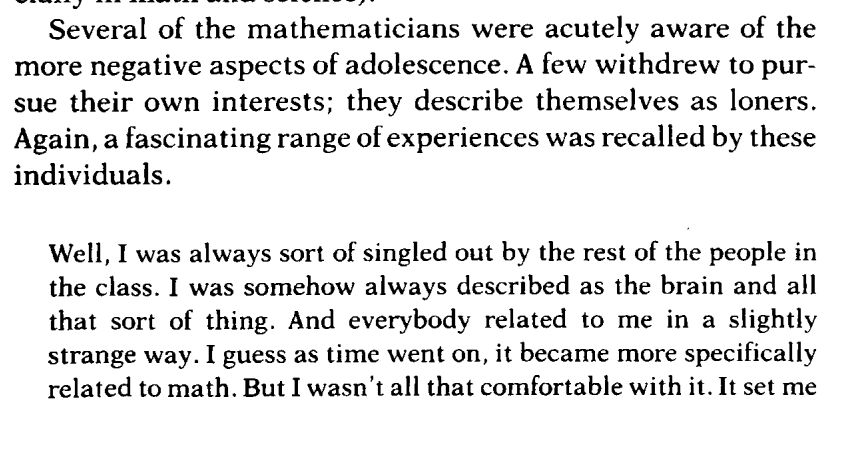
Many were seen as “different” and it made their life difficult in the early years:

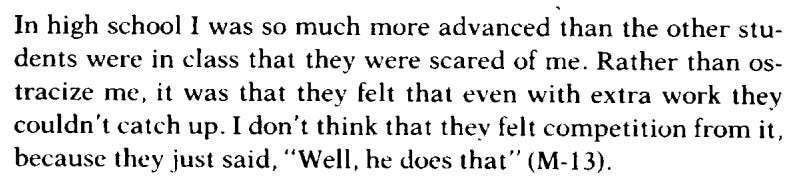
In undergraduate - they got good support, and also were pushed towards graduate studies:
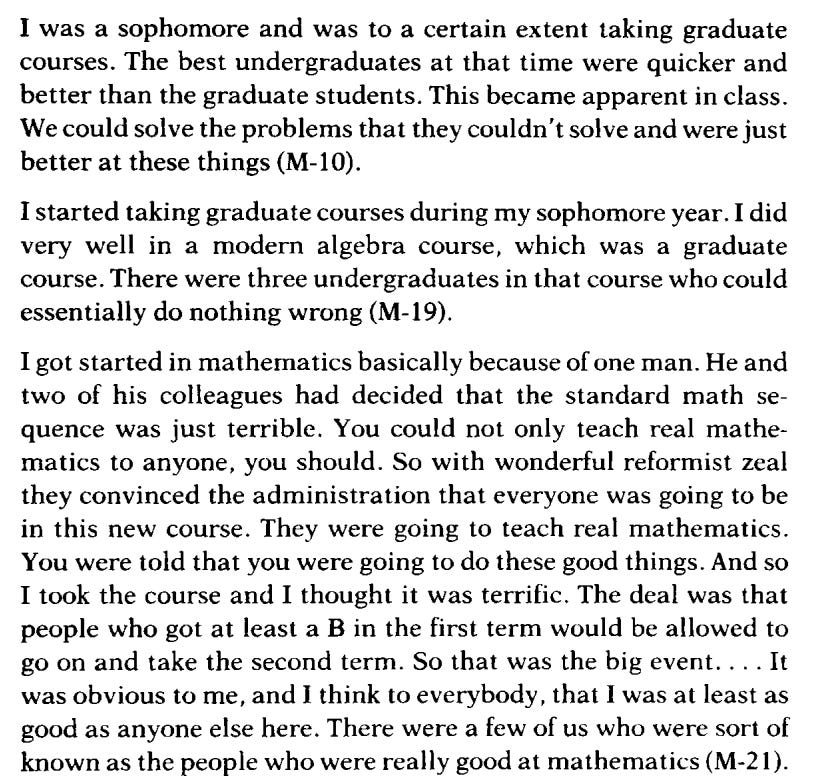
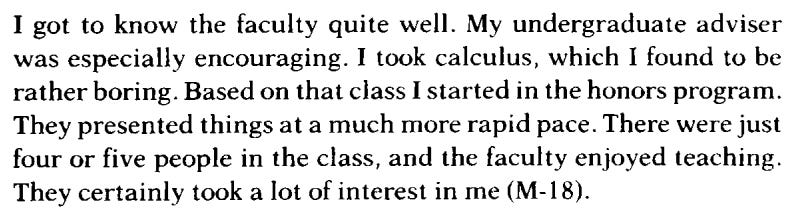
Some teachers with a power for showmanship could do really pull students into the subject:
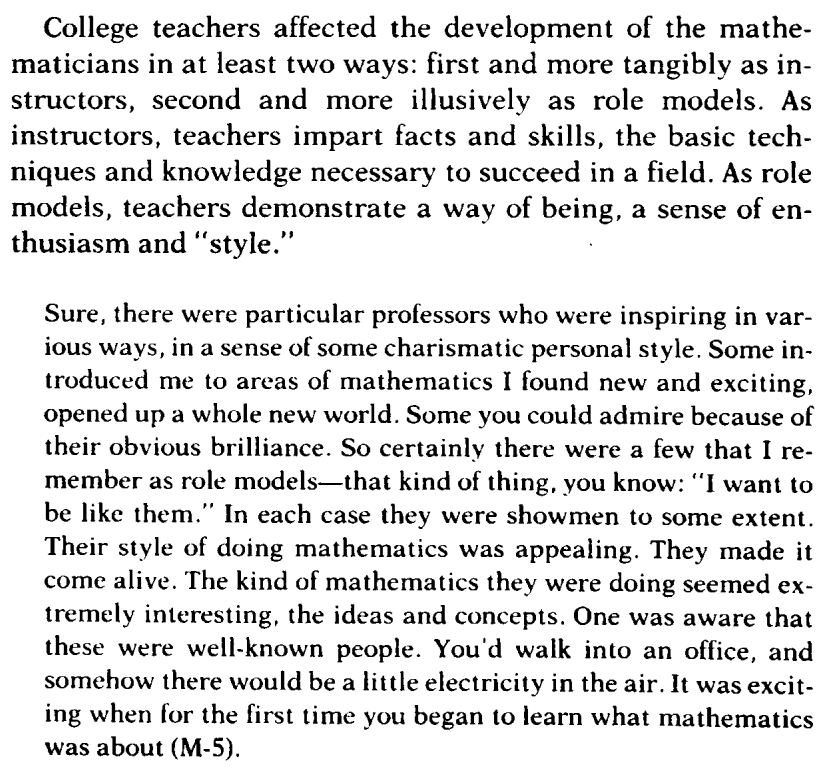
Some teachers were able to deploy the “spirit” of a field correctly to people:
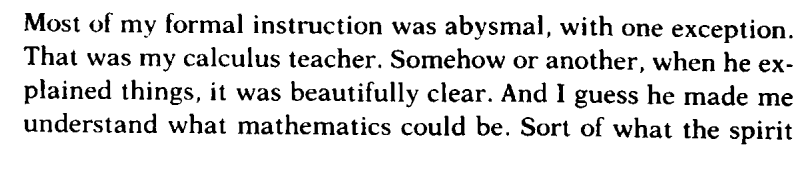
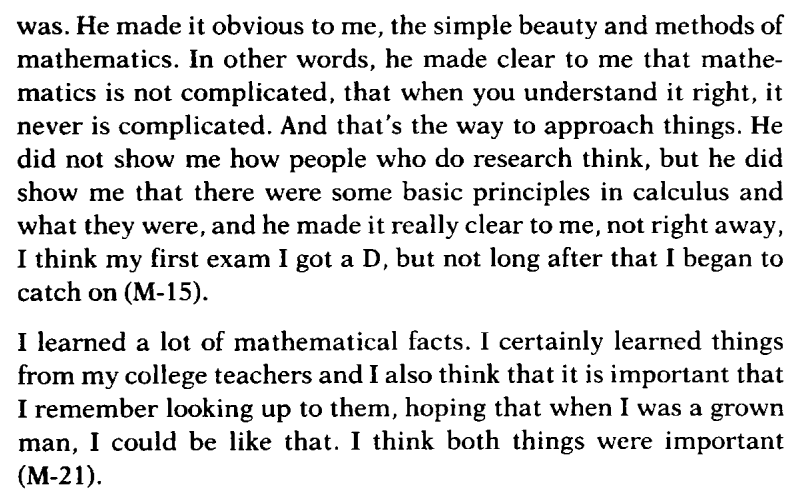
Real mathematical teachers are doers; and from observing their actions the learner leads how to proceed:
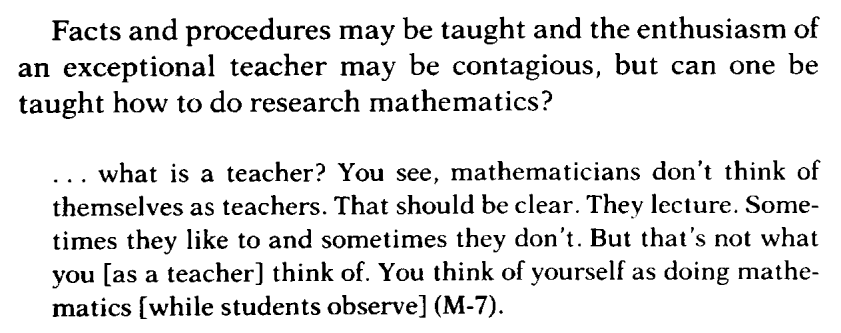
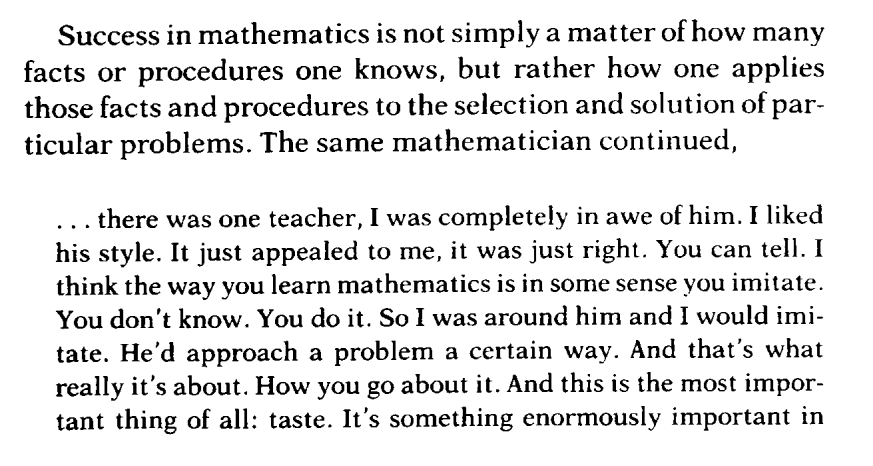
There are different styles to approach mathematics, and one learns from one’s own experiences and preferences to pick the style that suits one:

They built up their real peer group in college:
They liked the immutability of it - something that had real worth:
A pure need for knowledge is necessary. The drive for recognition, fun and so on is not enough:
At some point one shift from “play” to “serious”:
Others felt that these guys would be mathematicians. But they themselves were more focused on the next step - graduates studies - to figure out what math was. Look at the perspective - they were more focused on the content of the subject itself - and not on titles or what they may do in the future:
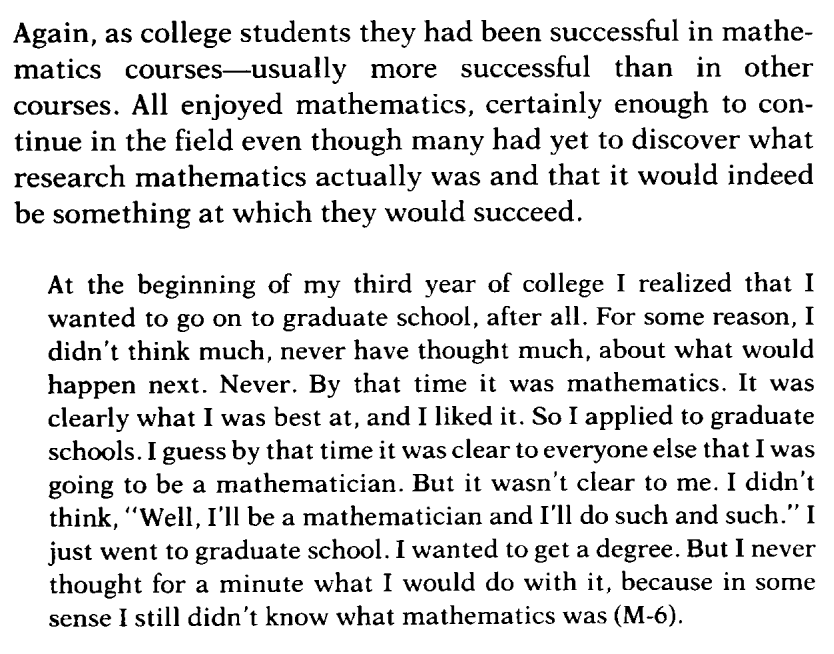
The great institutes are important and most mathematicians were associated with the top 10:
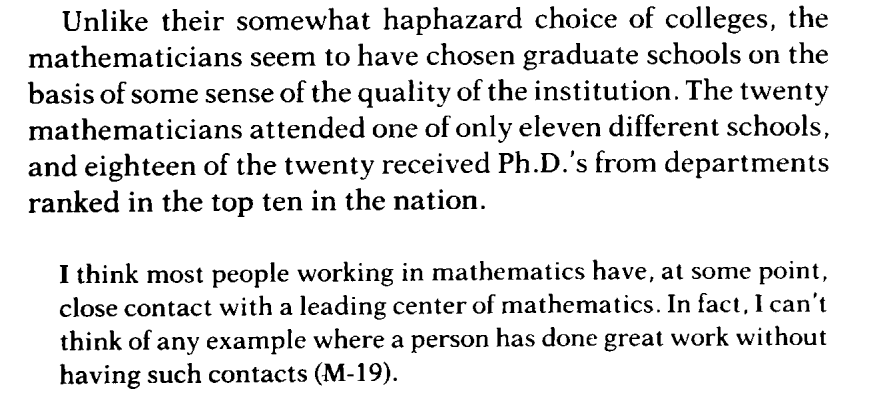
By then they had selected more of their affinities - at a departmental level and sometimes even at a professor level:
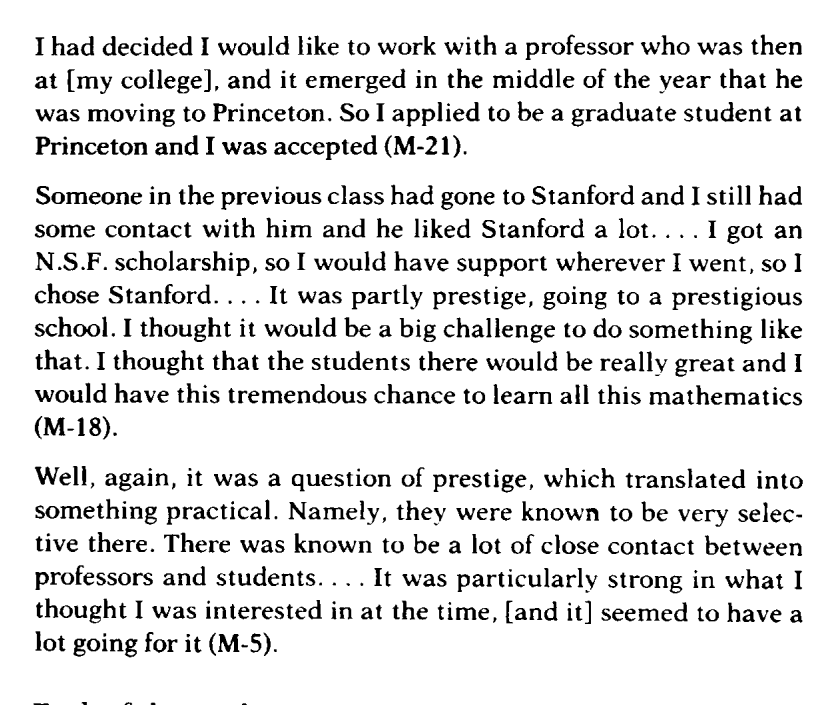
Graduate studies are extremely intensive, and you start dealing with the truly top minds in the area:
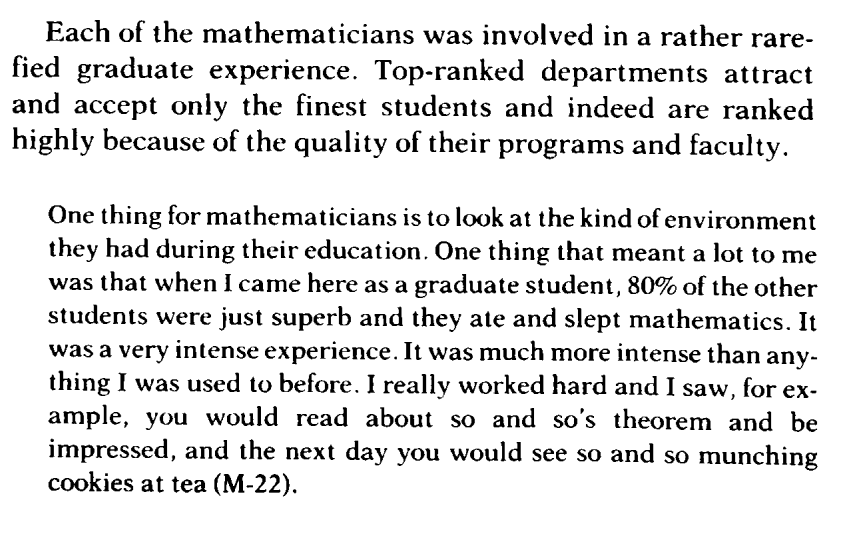
In graduate school - especially in research areas - you become exposed to uncertainties of different kind and learn to go with it:
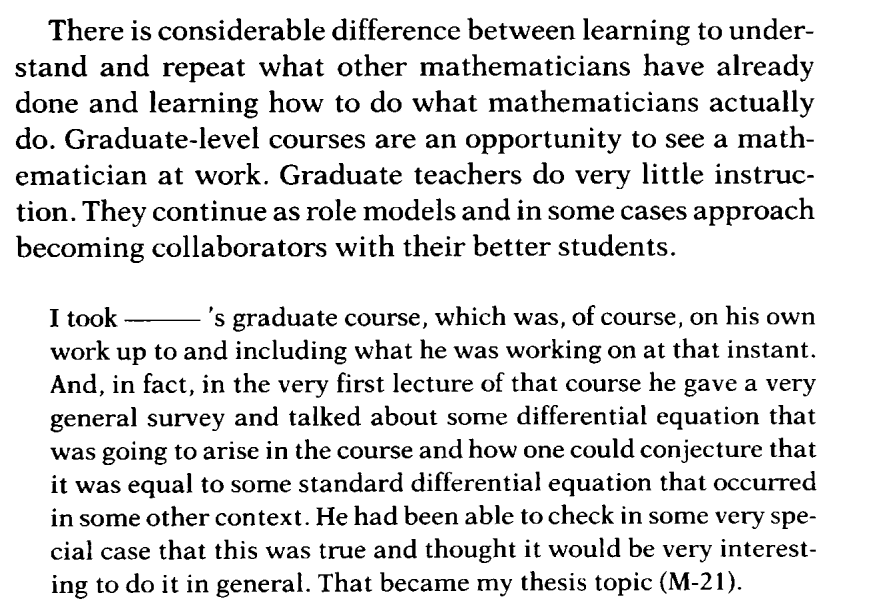
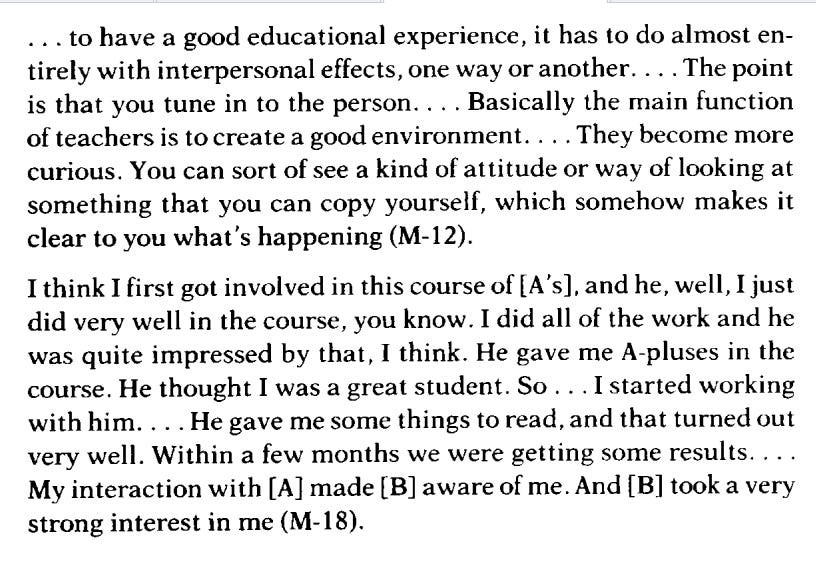
From serious studies - there is a stage of independent creative leap - can you be creative on your own and produce worthwhile things?
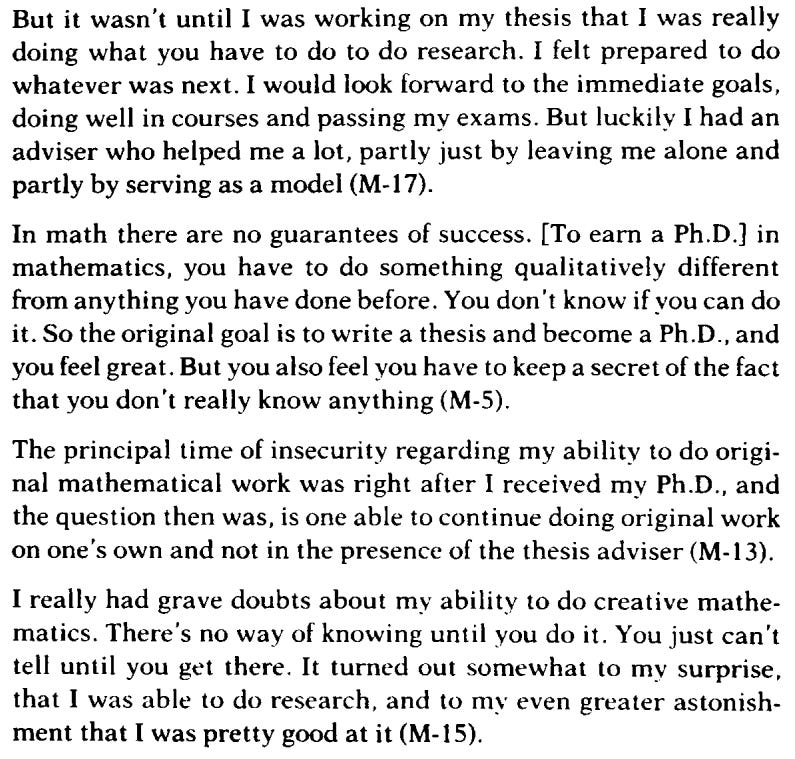
All the top mathematicians are immersed in their fields - they give lots of time and energy:
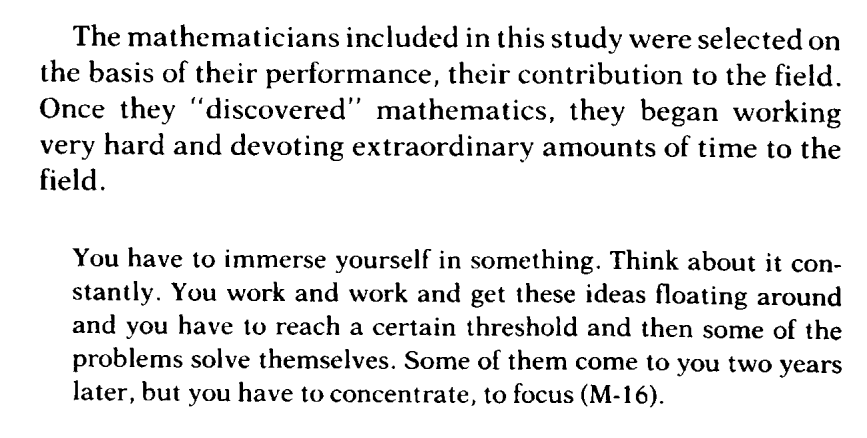
No work is wasted in mathematics - even if it looks like that sometimes - you just keep working at it, chipping at the problem from many angles, working hard, and playing hard trying to get a crac the probelem:

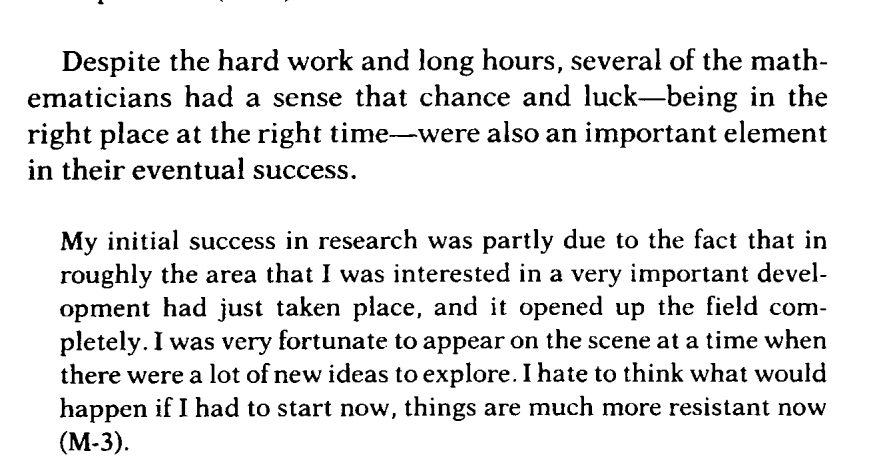
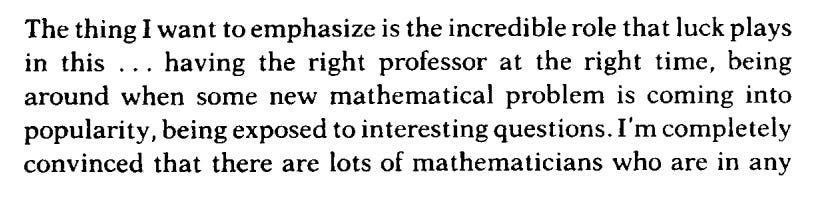
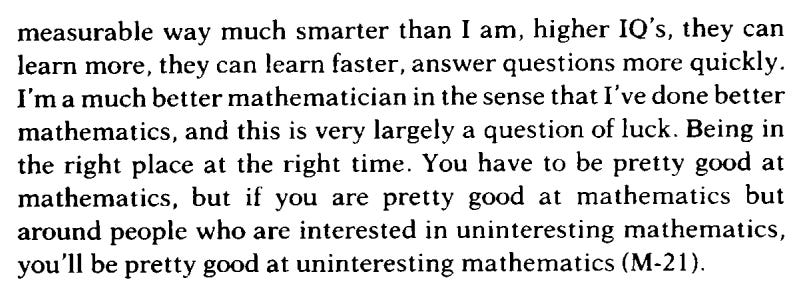
But there is also a very big luck factor in it - the environment, timing, one’s circumstances, preparation, all play a role:
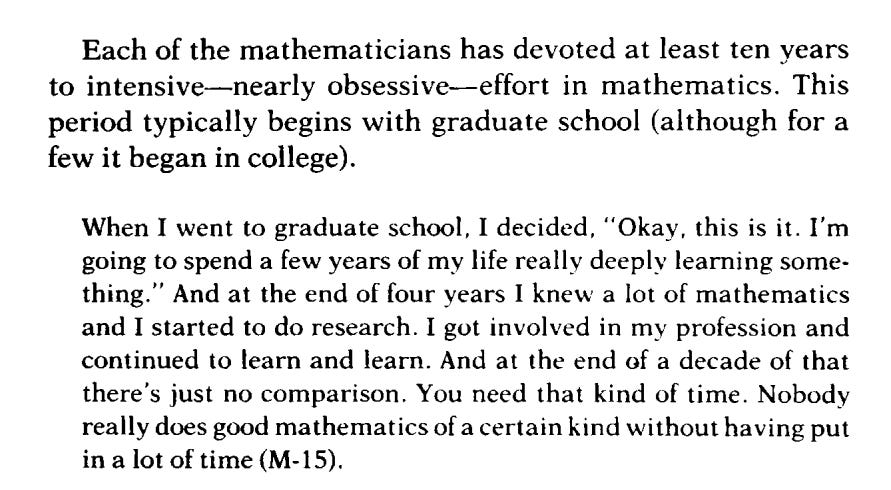
A 10 year of hardcore effort is needed to get good at any mathematics (starting from graduate school):
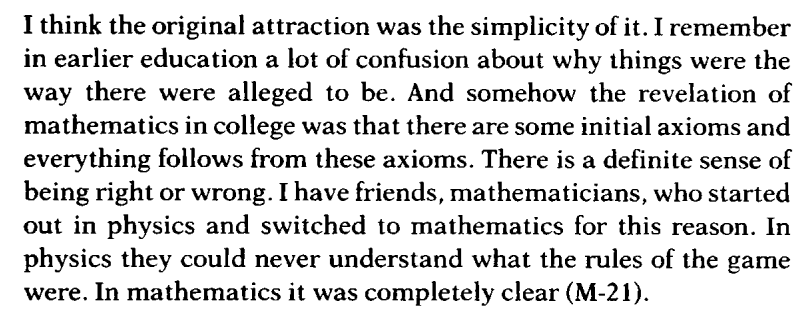
In physics the rules of the game are not sometimes clear; in mathematics it is usually quite clear:
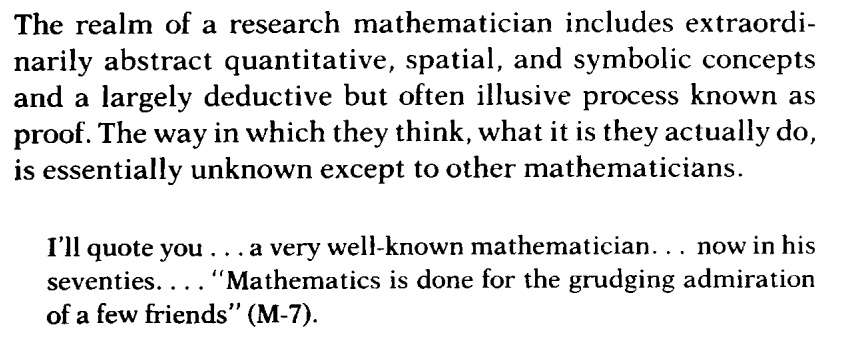
Mathematicians try to seek the respect of other mathematicians:
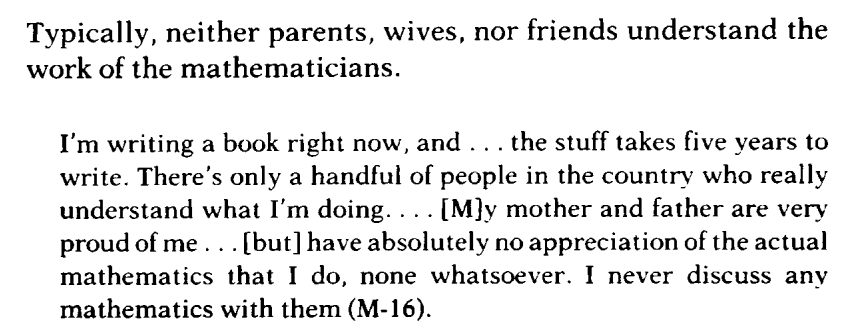
Most others in the country cannot appreciate their work - just a few people can appreciate their work:
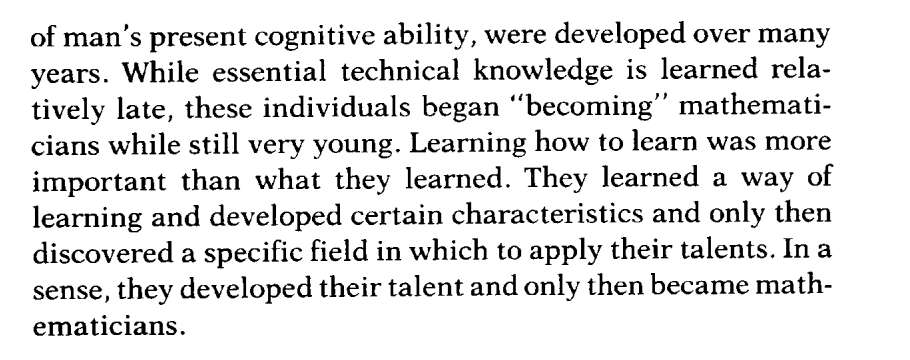
Mathematicians are masters of learning things:
This ends the section on mathematicians. I am going to skip the section and excerpts from the neurologist - since I think I have got the overall drift of things and the way things progress across disciplines.