Developing Talent in Young People (by Benjamin Bloom) - Part 2


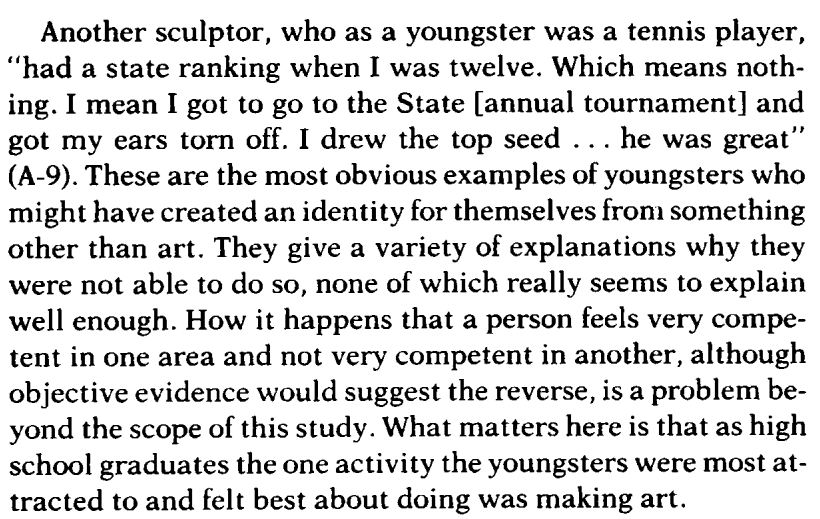
The to-be sculptor were pretty good at some other things (state level wins, etc), but still they didn’t make it their identity and didn’t think they were so good:
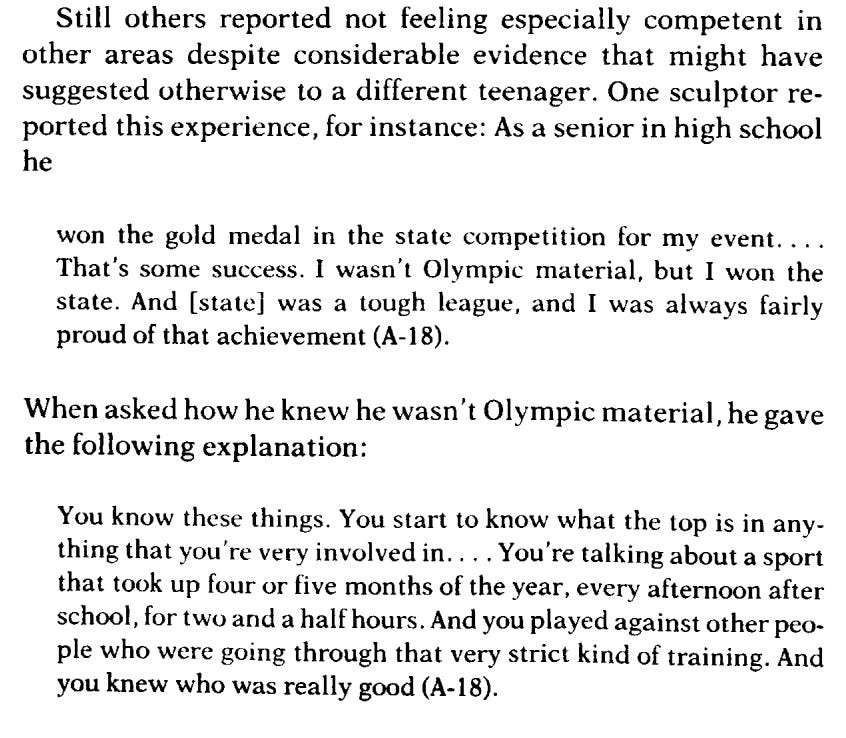
Many artists were good at sports - but didn’t make it their identity:
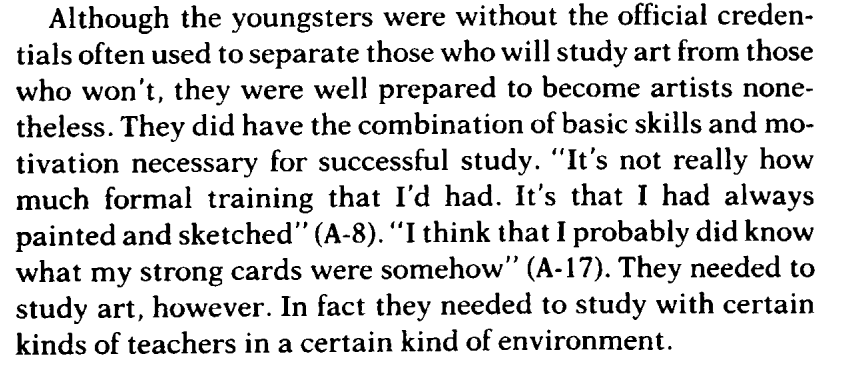
They didn’t have the credentials but the right attitudes, the right buildup and prerequisites:
In art school, they met professional sculptors who did it for a living - then the students were hooked:
The teachers set an example of absolute commitment:
Art and craftsmanship is acquired via apprenticeship:
It was a high standards environment:
You learn big picture from teachers, and you learn details from your students:
They had a kind of obsession to follow-up and work hard on their ideas without pushing:
Sculptors just work with projects to pick up things over time:
At some point - you start moving beyond techniques and start looking at the field itself:
A stage came - where they were constantly studying from the other big leaders of the field but also trying to do better:
You need to have a group which is critical of your work:
Get good at 2d to earn the right to do 3d:
In painting, you can iterate more and develop capabilities first - before investing into mega projects - which sculpting usually ends up being:
The artists are used to giving 100% - from their younger days:

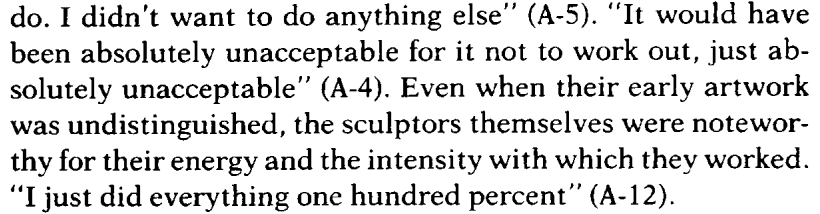
The artist must have motivation and discipline:
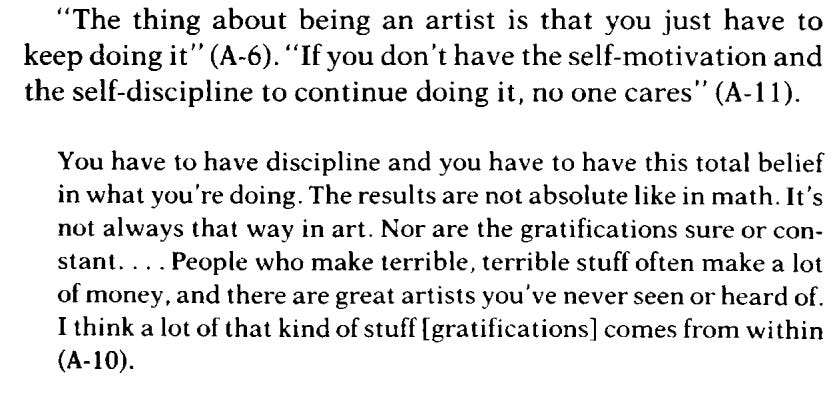
You just have to “hang in there” for 7-8 years, because that much commitment is needed to make artistic capabilities work:
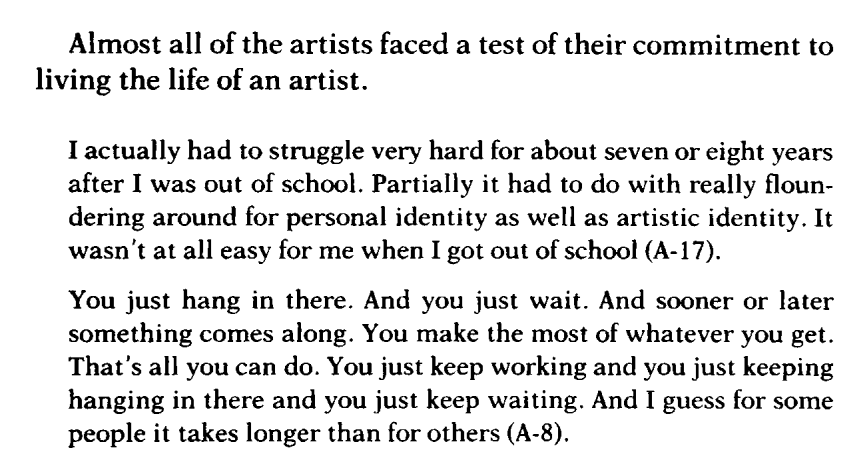
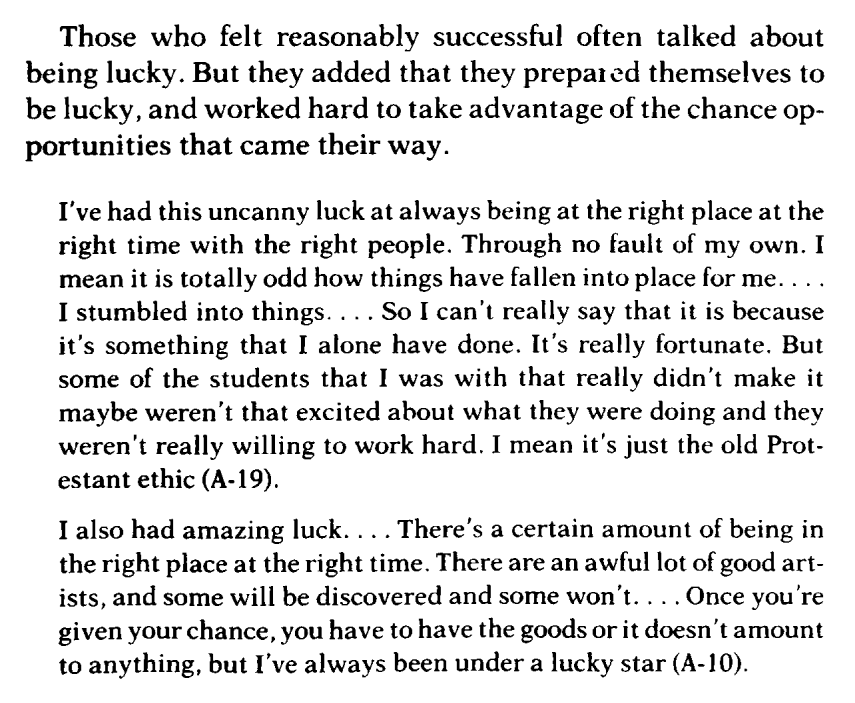
If you work hard for a long time, then you also notice yourself getting a bit lucky, with opportunities opening up and so on:
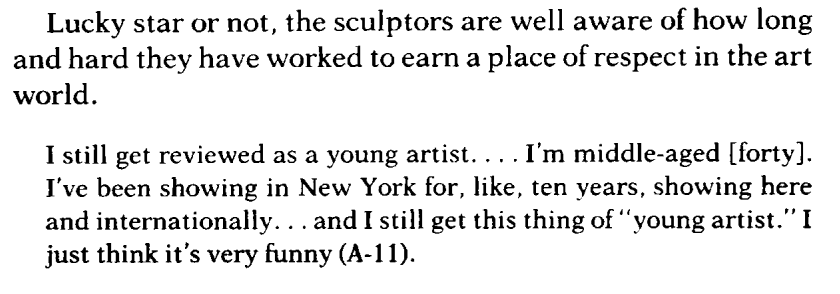
A 40y artist still gets categorized as “young artist”:
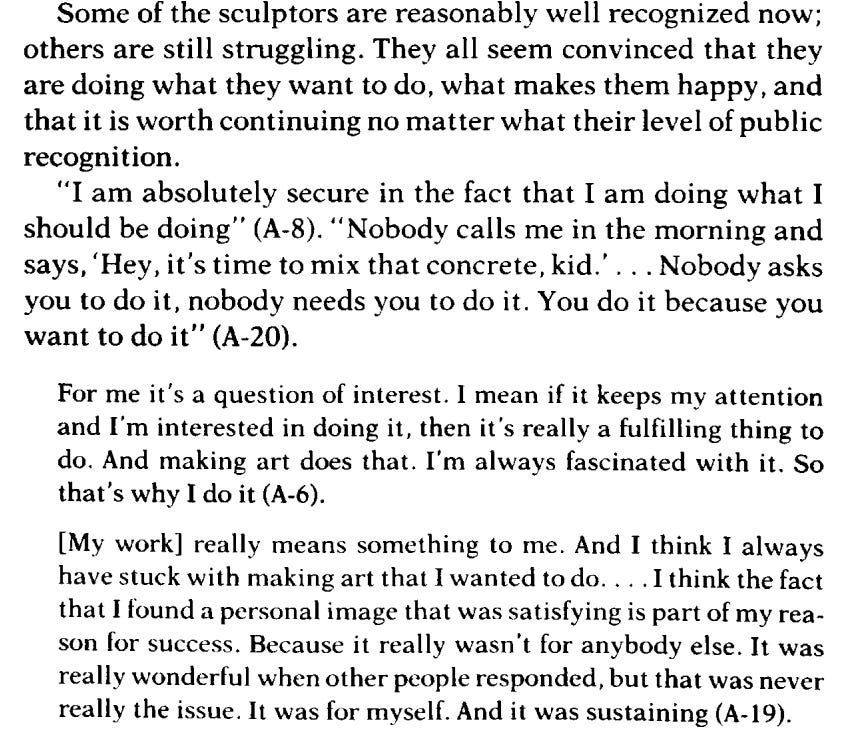
The artists cannot not do it:
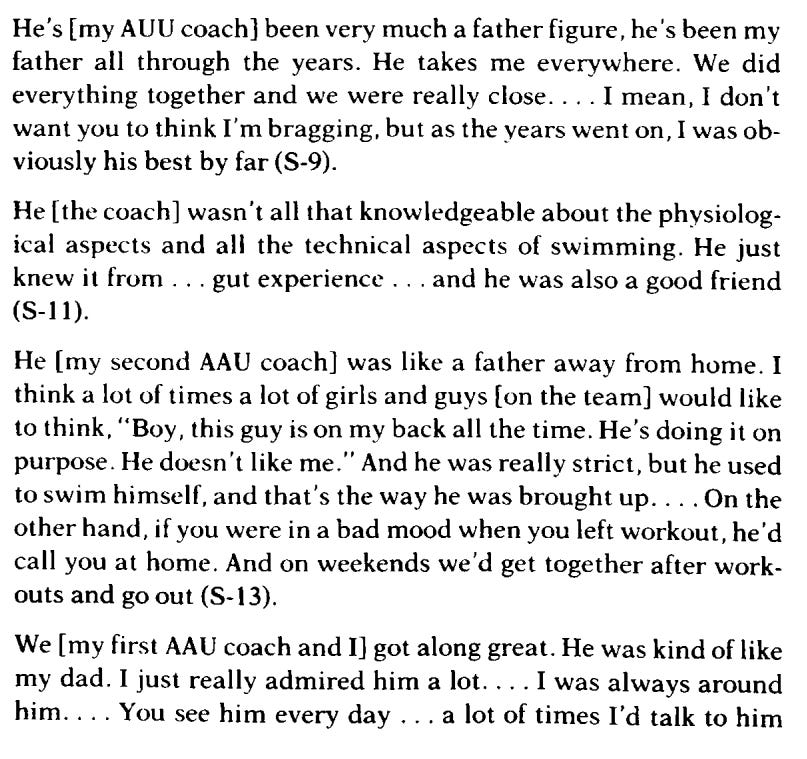
Now we move onto the interviews of Olympic Swimmers.
For Olympian swimmer - they were mostly raised with the protestant work ethic - you do something to get something. Nothing comes free:

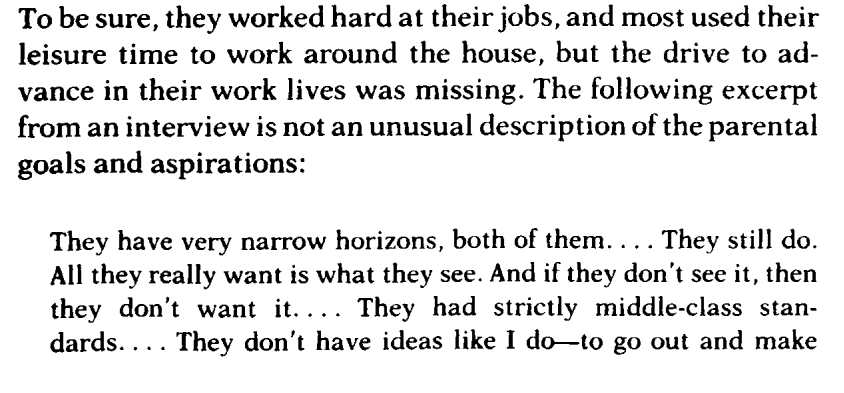
The parents generally had limited goals and aspirations from work perspective:

The household tends to have some athletic interest or the other in Olympian households though - not very serious, but still there:
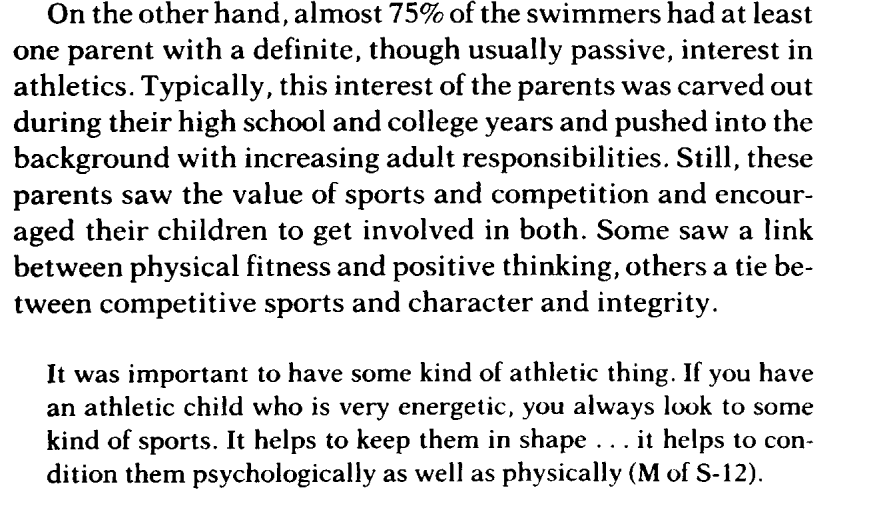
In particular - the families appreciated the positive values of competition:
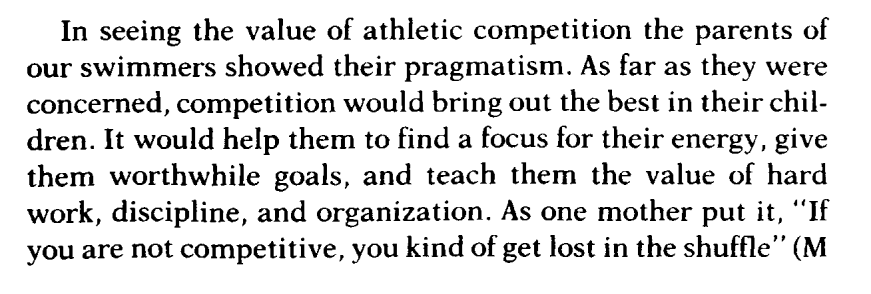
The families tended to have a highly disciplined approach to life:
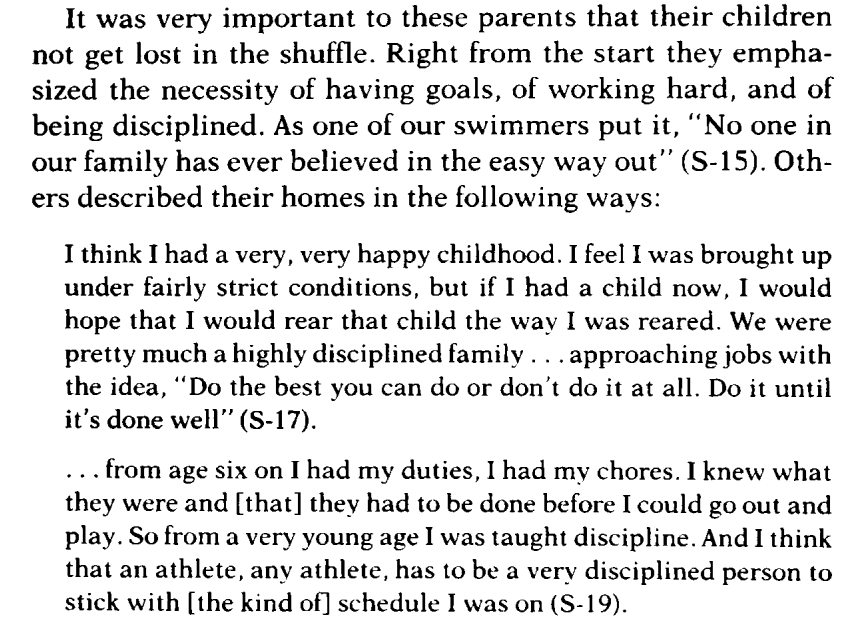
In the culture, there was an idea of deliberate practice - the idea of doing things well:
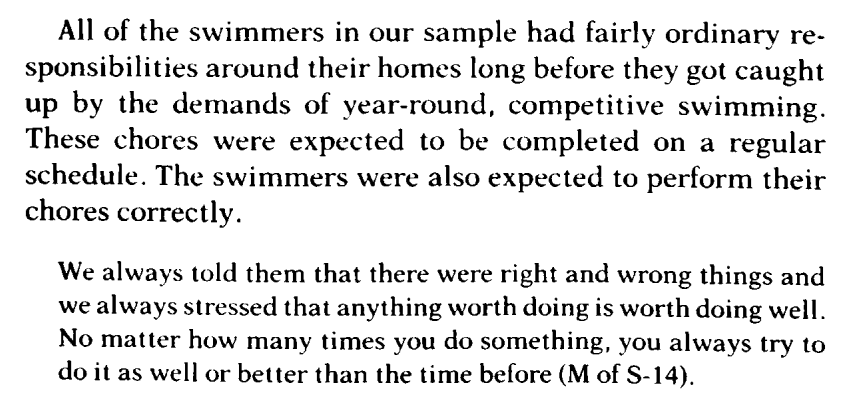
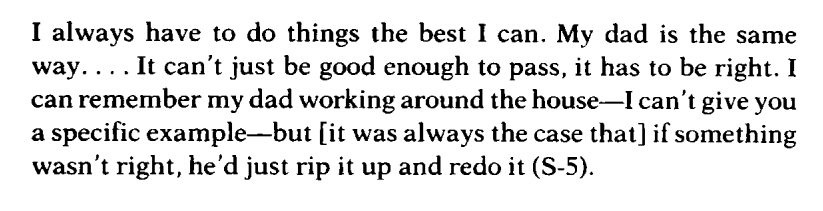
There were perfectionistic tendencies:

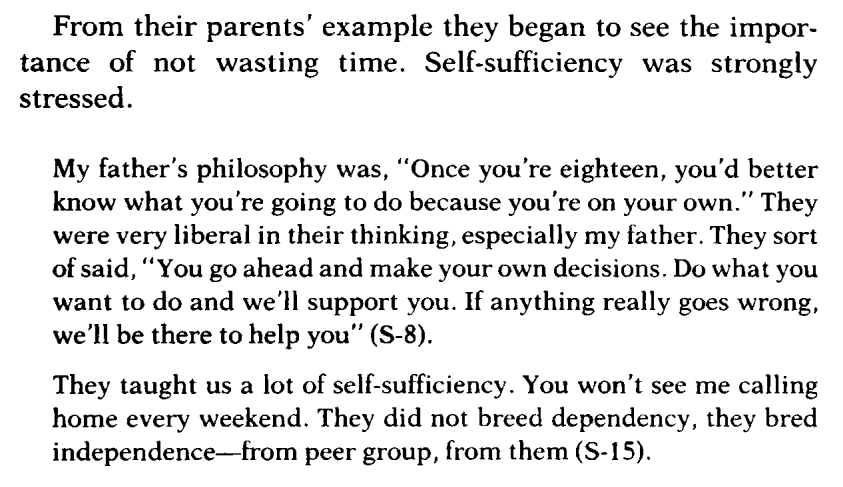
There was a push for independent decision making:
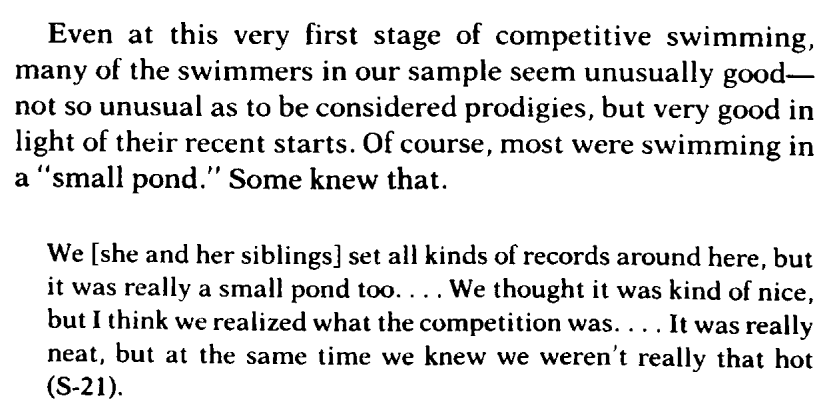
The children were winning locally early on - talent was visible at local level very early:
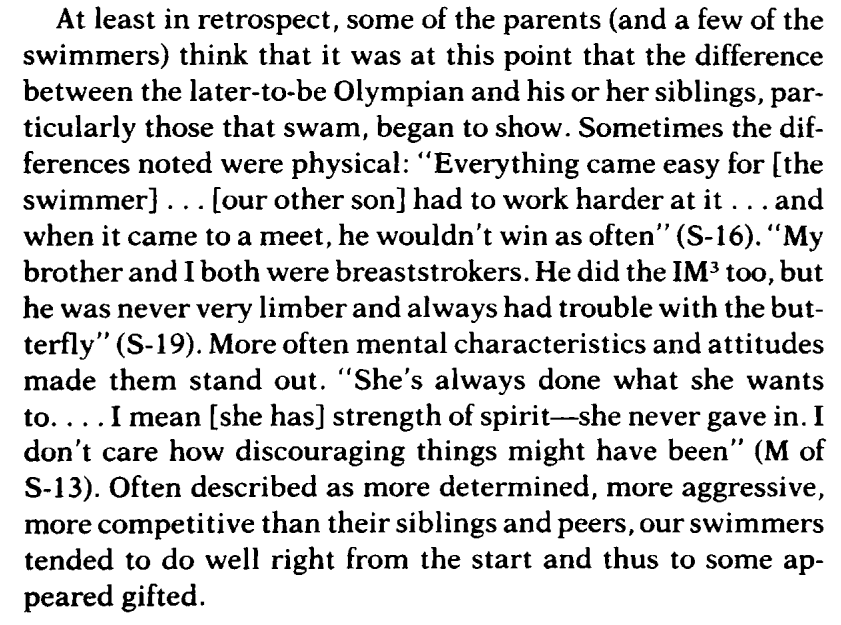
The mental characteristics of the winners is visible from early on - they are more determined, more able to take on challenge, and more able to cut through obstacles:
Swimmers generally caught attention of coaches, and then they got into serious training:
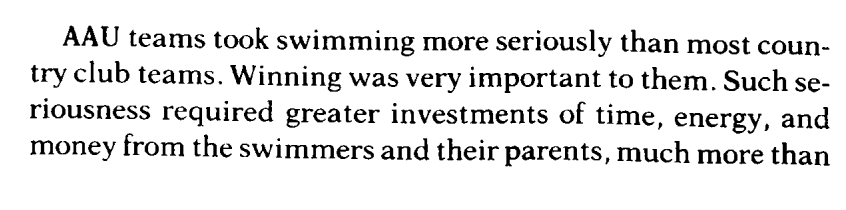
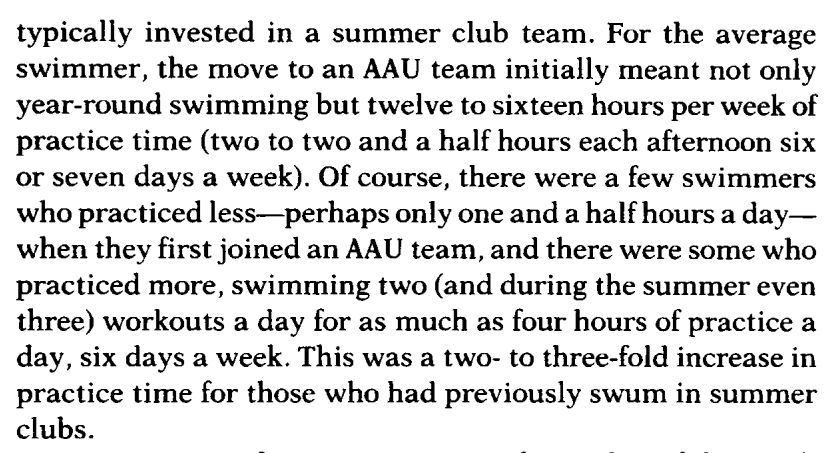
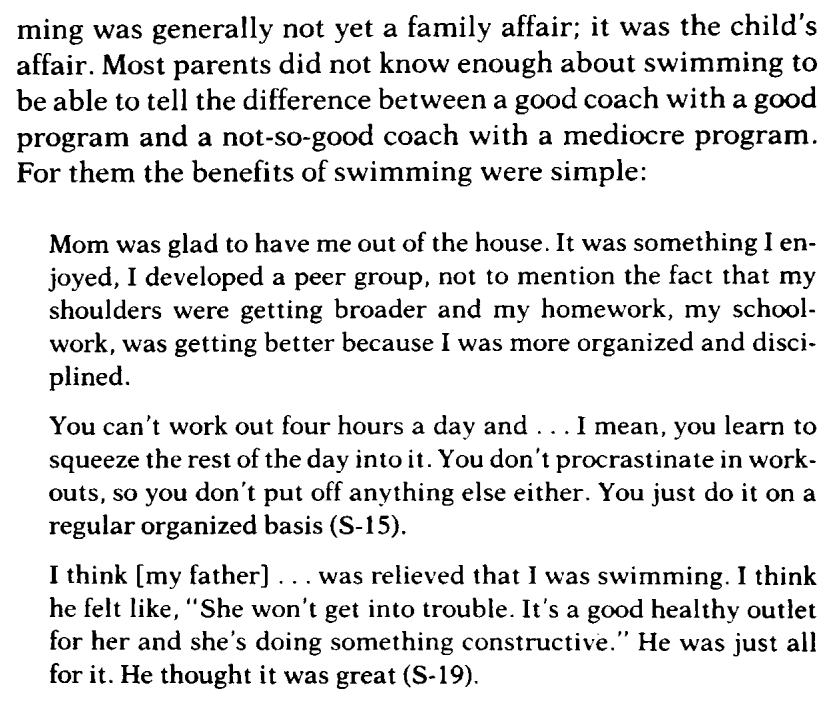
Swimming made them more organized and disciplined in other areas of life as well:
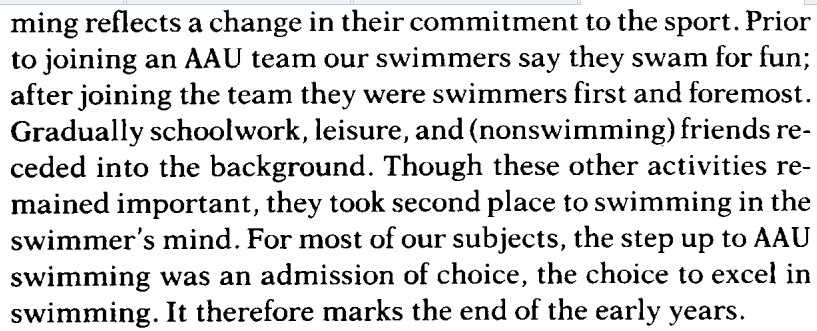
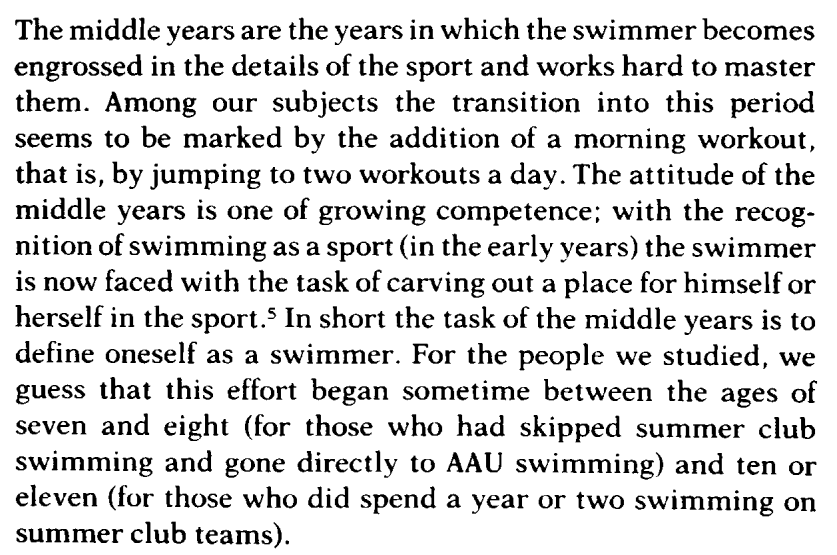
Swimming changes from “fun” to “identity” - that is an important transition:
Then in the middle years - they increase the training investment even more. They double the number of sessions:
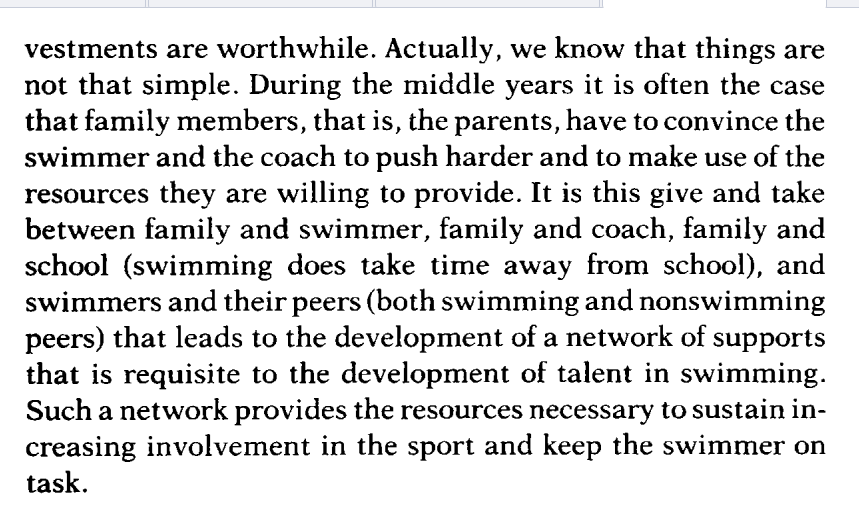
For each swimmer, a network of supporters gets built up:
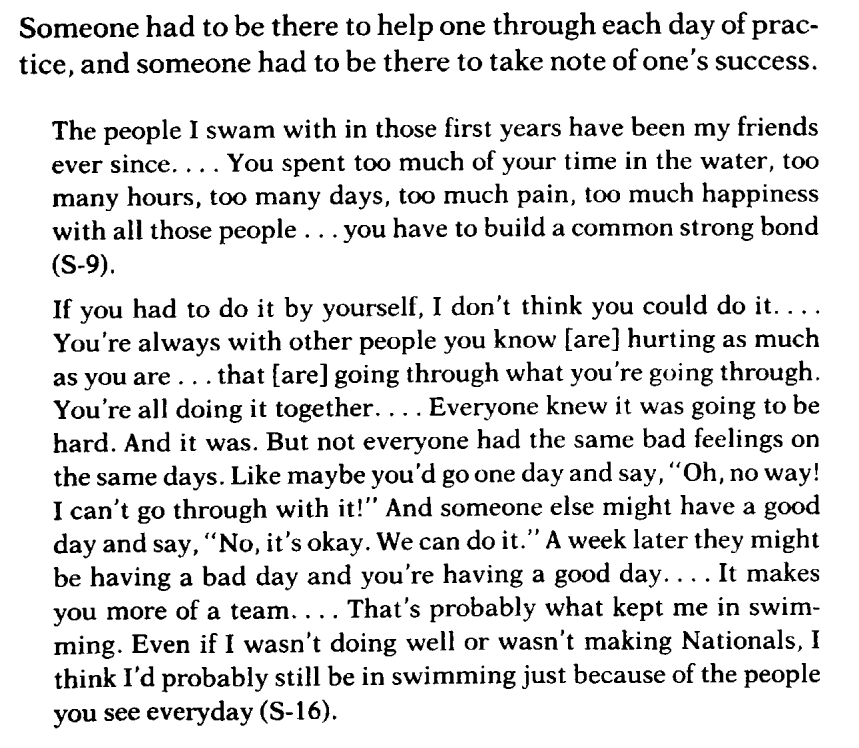
Peer group also adds the support structure - spurring the athlete on:
Coaches helped the young athletes keep raising the bar: