Scale (by Geoffrey West) - Part 19


There are indeed things like “human universals” due to which no matter how different cities look on the surface - they all scale in similar ways due to such commonality in human aspirations and conduct:
The main factors of human conduct are: language to construct ideas together, collaboration to leverage economies of scale, and the imagination to see a future together:
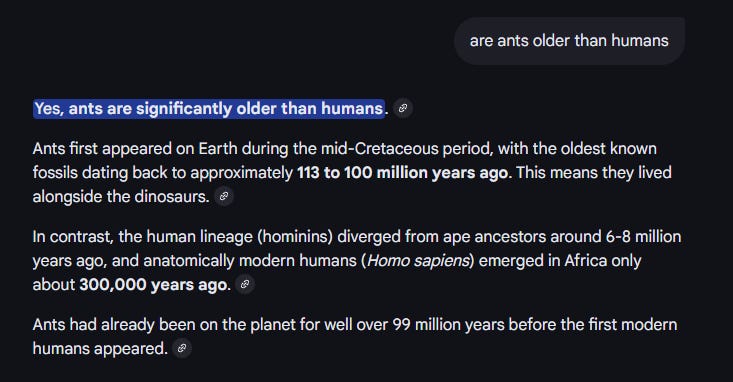
Ants have been around before us and probably after us; they’re efficient, resilient and capable in their own way:
Never underestimate ants:
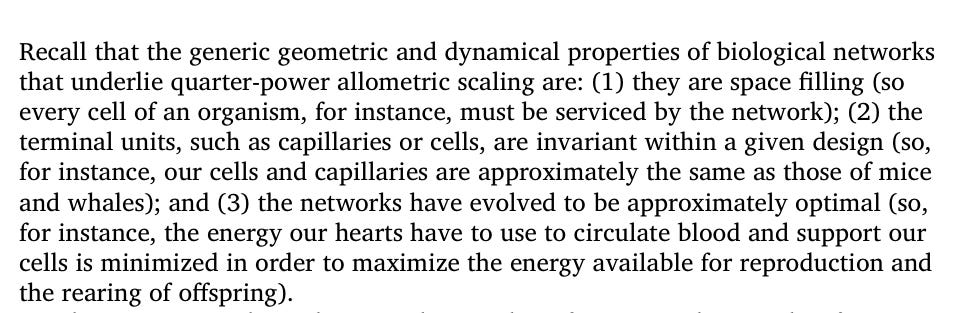
The properties of networks in biological organisms was:
Space filling - every basic unit gets serviced full and well
The terminal or basic units are mostly fungible
The network grows to be approximately optimal
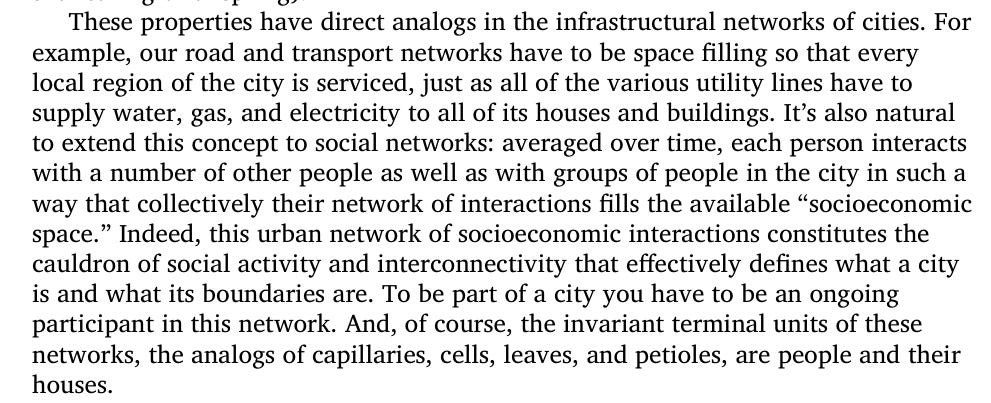
How does a city fulfill the above properties:
Every critical service ultimately serves every region, house and individual in a city - in some way or other
People can move out of a city or change their cities - but the character of the city remains largely the same regardless
Over time - the city become efficient in serving the people in terms of the infra and other needs
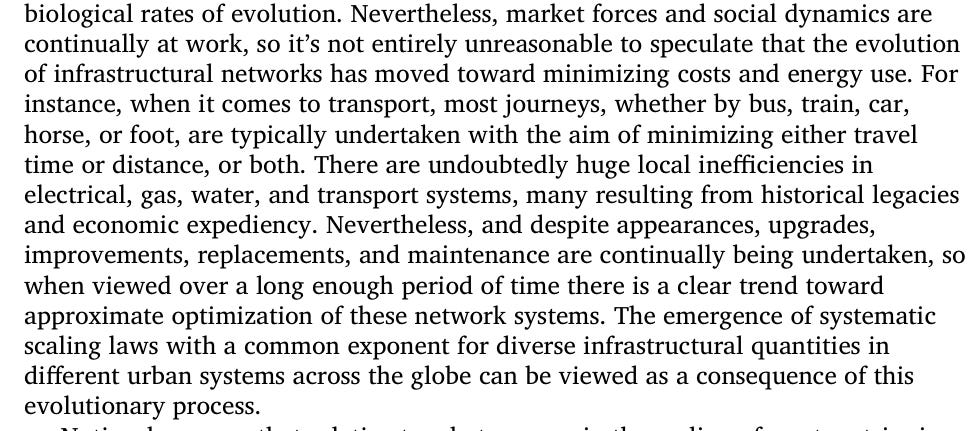
Sometimes on the surface it may look like the city is not really optimal - but we must remember that cities have long lifespans and there is always some sort of improvement or adjustments happening - towards optimality:
The core optimization in social network perhaps is the desire for “more”, or in crass terms - “greed”. Each individual tries to improve their position within the network:
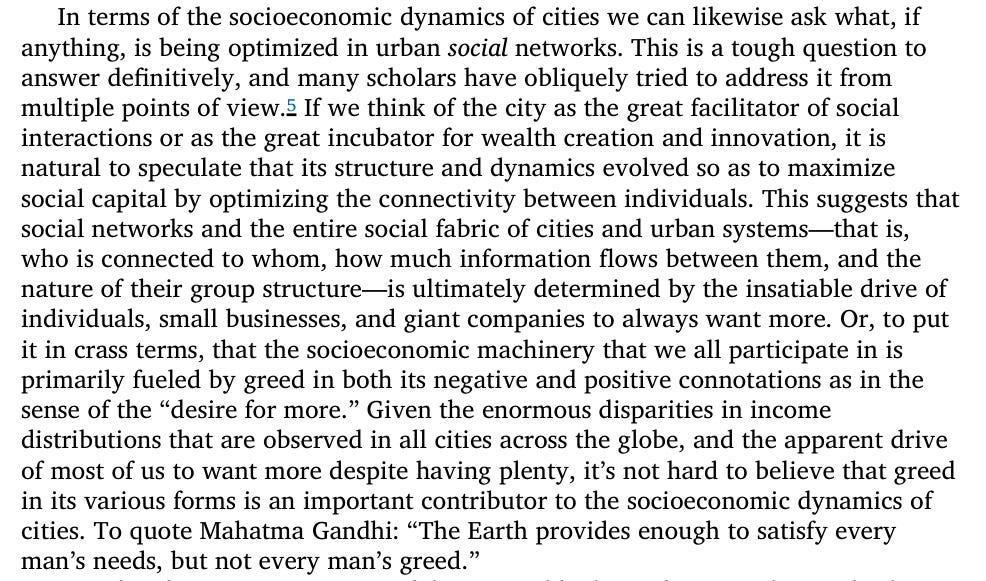
The definition of “more” goes beyond simple economic desires - but a broad push for whatever is “higher”:

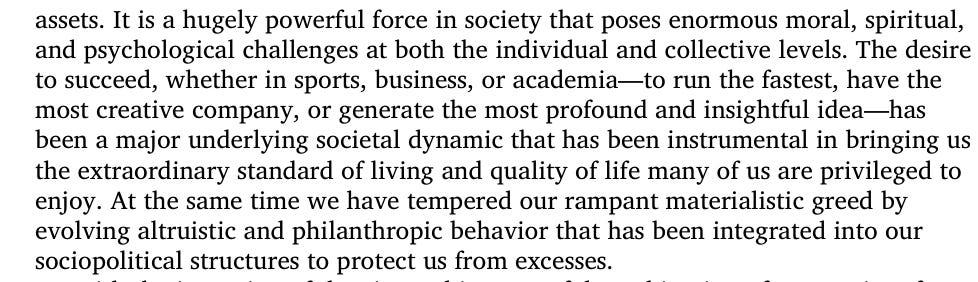
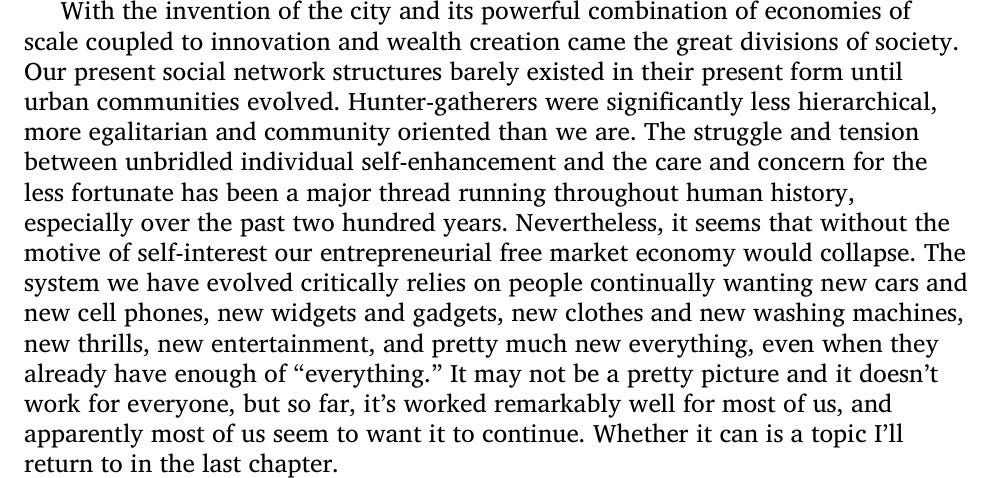
The system with a desire for “more” or “better than the other” has worked for most people - but the author acknowledges that it doesn’t work for everyone:
In case of the cities - we are aware of “centers of activity” - or the “heart of the city” and so on - so cities tend to be an aggregation of powerful clusters:
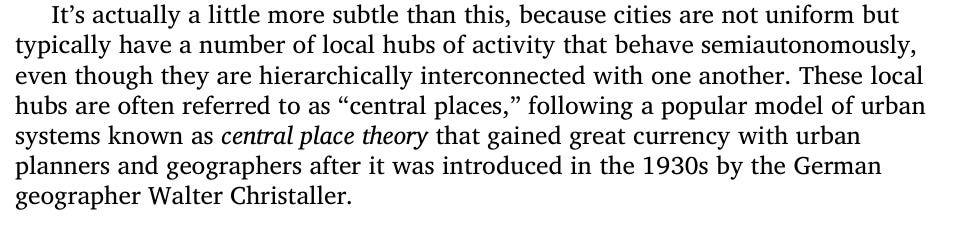
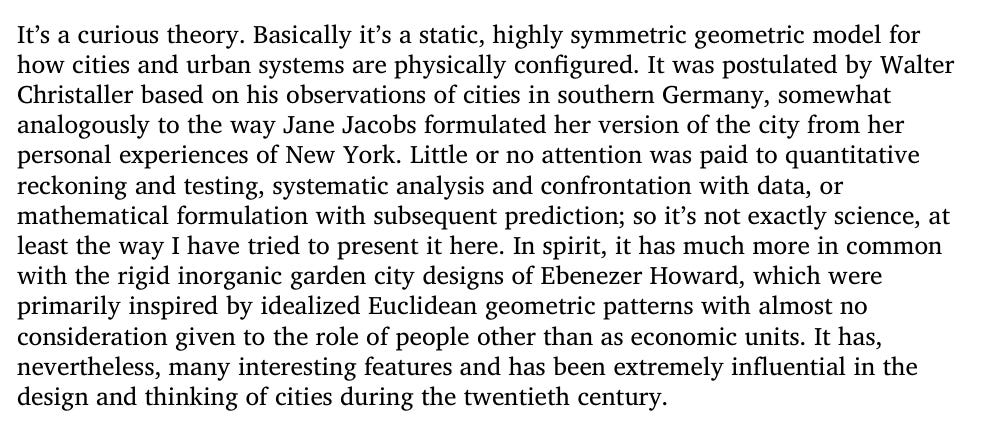
Walter Christaller was another Jane Jacobs type person interested in cities and formulated a qualitative theory of cities that became very influential:
He came with a kind of crystalline structure as shown below - city at the center, villages surrounding followed by a layer of town and then village again (so on?).
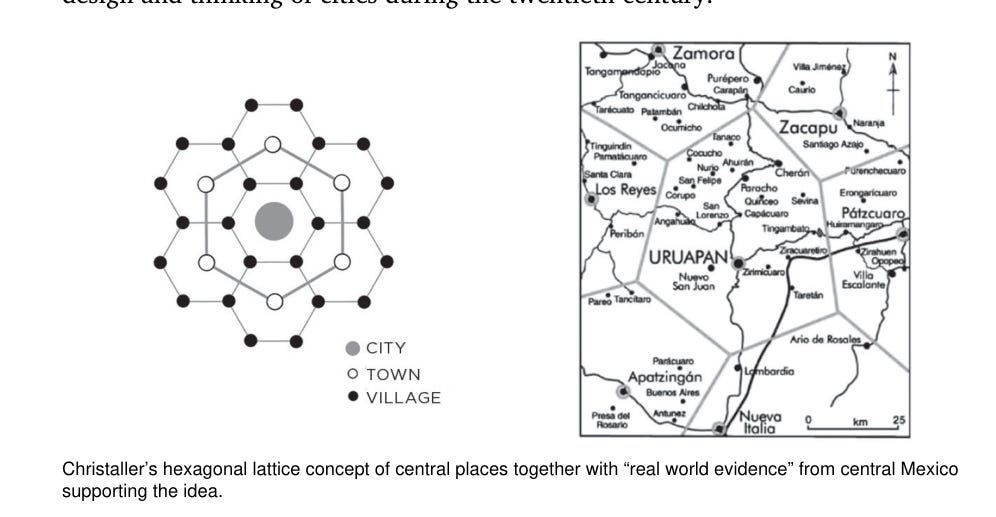
He didn’t do a graph - but he was going in a similar direction - but lacking in deep mathematical and conceptual tools and training - could only go so far:
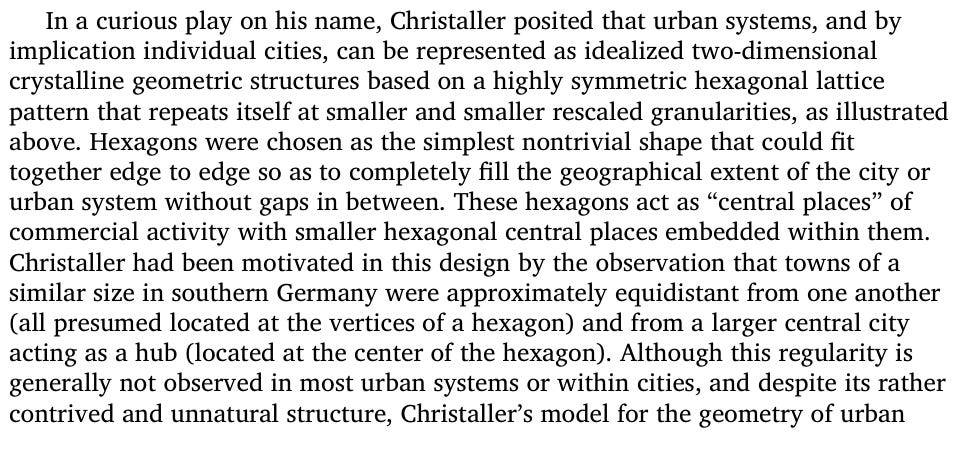
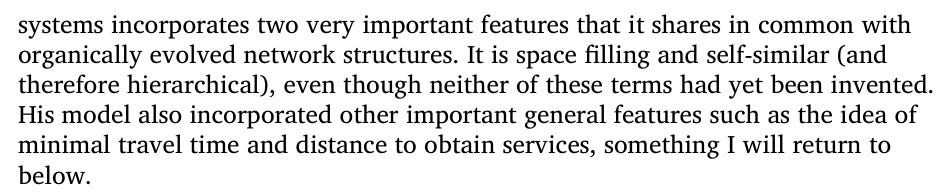
Cities are self-similar fractals like biological organisms or geographical coastlines:
City vs Bacteria - see how similar their growth looks: