Scale (by Geoffrey West) - Part 26


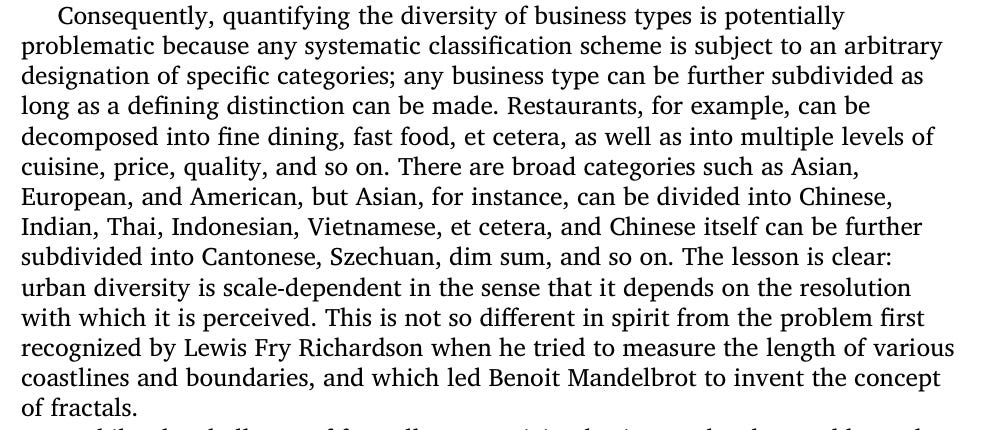
Business activity cannot be easily classified; one can go deeper and deeper into it - in a fractal like way:
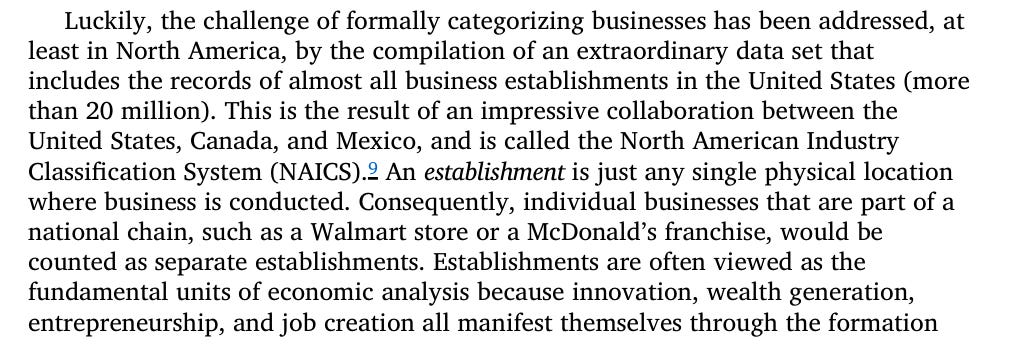
NAICS is one of the most granular datasets on businesses in the US:

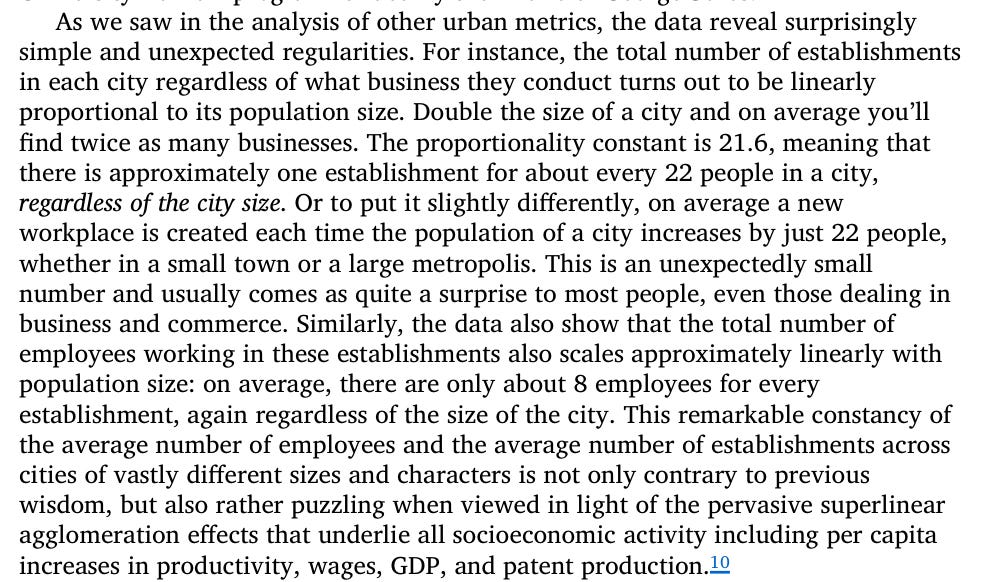
The number of establishments in a city grows linearly with size. For each group of 22 new people added - an establishment gets created on average (unlike many of the factors we saw previously, which were either sub or super linear):
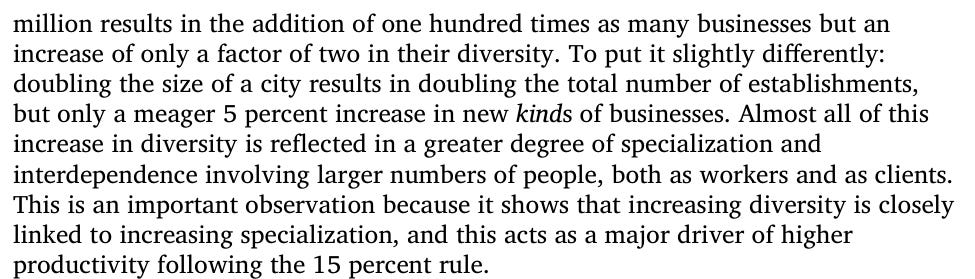
The diversity of business types is slower to grow:

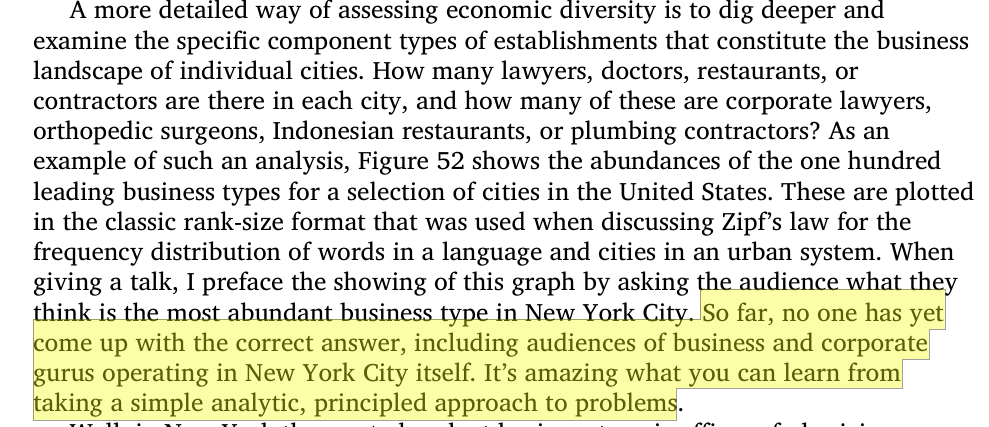
Without taking a simple, analytical view of a problem - even the residents of the city cannot possibly grasp the dynamics of the socioeconomic situation; most people have no idea what’s going on:
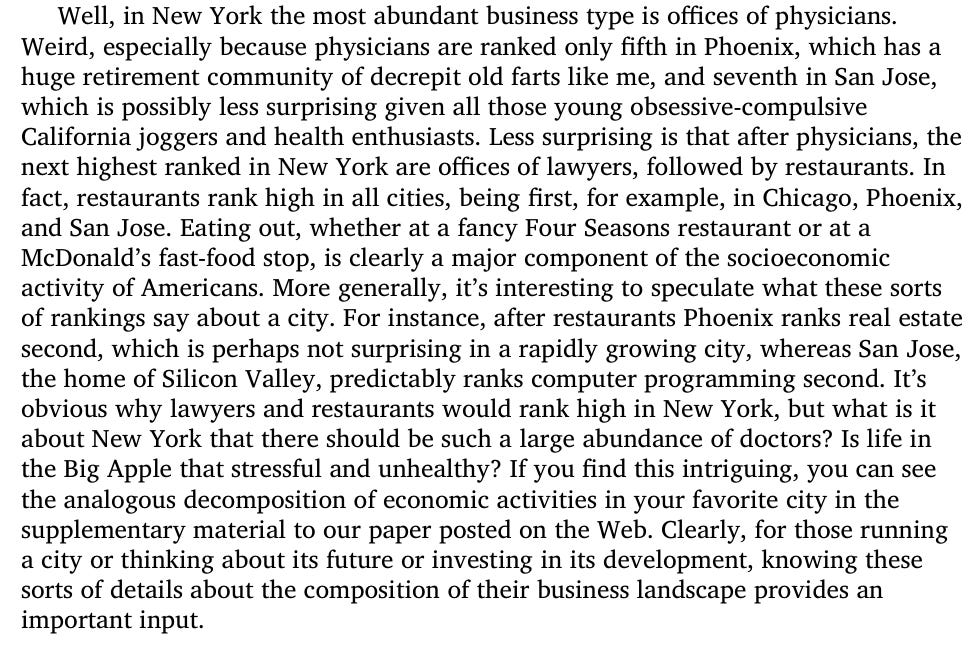
Office space tends to be very big business - because it is infrastructure; but what type of practitioners do they support? The results might be surprising.
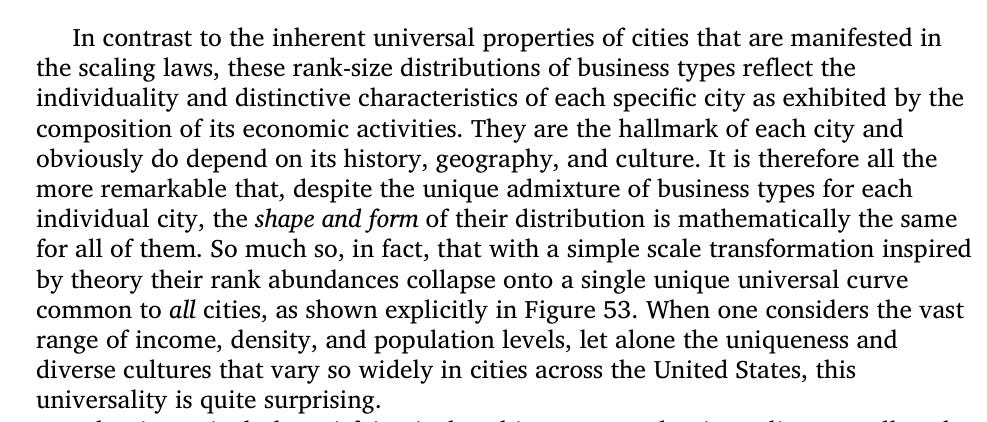
Regardless of the specific type of businesses - the shape and form of the curve is almost the same all cities in the dataset:
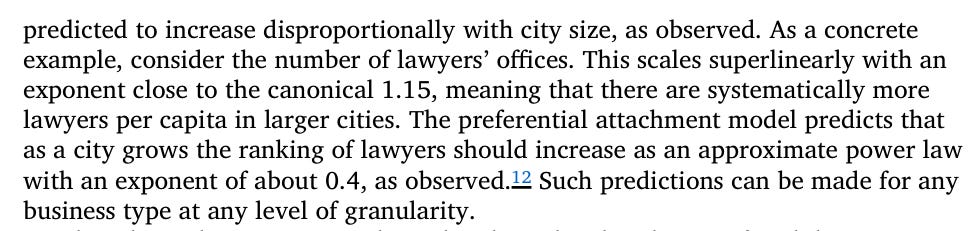
The rich get richer, the smart get smarter, and so on:
One who doesn’t increase one’s knowledge actually decreases it:

Preferential attachment was done with Herb Simon’s ambit, by a collaborator - to explain how flowering plants are distributed in their genus:
The growth a particular business type depends upon how the underlying sector behaves - is it sub or super linear? The business type scales the same way:
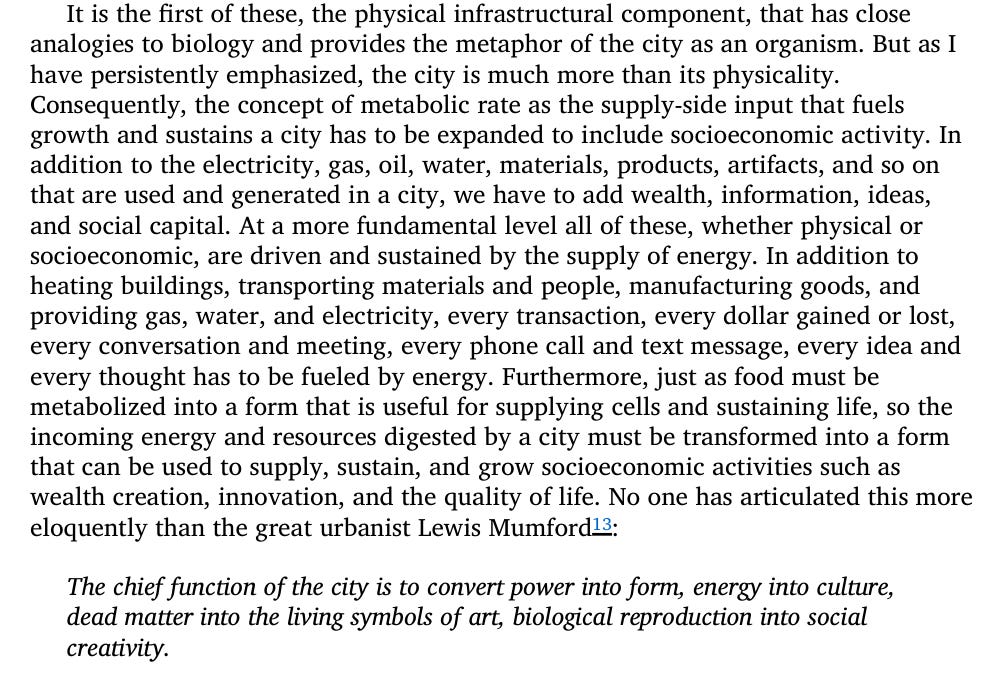
The city is a transformer of inanimate to the vibrant:
As cities grow bigger - their input energy grows super linearly, far exceeding the maintenance energy requirements:
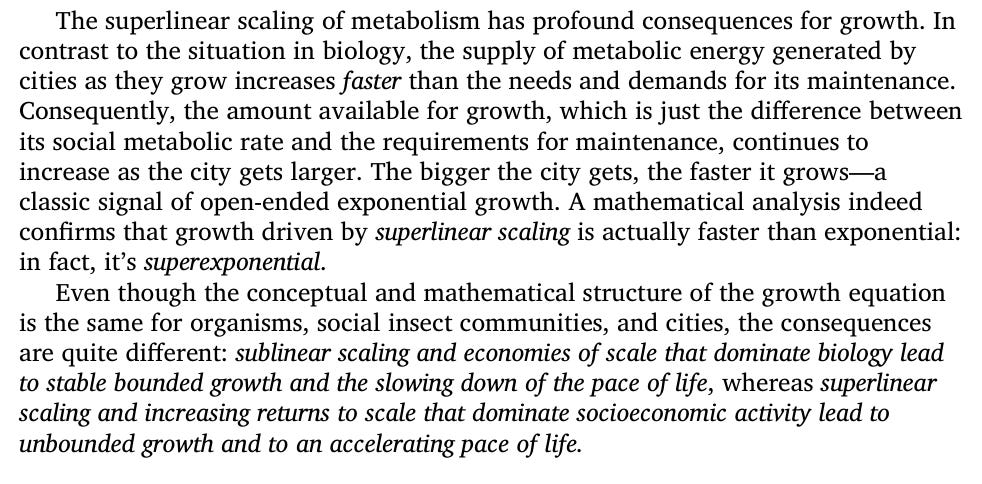
For most cities - the population growth looks like this usually (superexponential):