Traction by Gabriel Weinberg - Notes

This is a book by the founder of DuckDuckGo. He sold his first company at 28, I was called Names DB, and he built it all by himself. No employees. Then he started up DuckDuckGo and announced it to the world around 2008. And he’s been at it almost 17–18 years now. So clearly - he knows a thing or two about the idea of “traction”.
Signs of something working is very important for an entrepreneur to keep continuing:

If there’s a magic want to address any startup problem - then traction is it. Traction will help you solve all sorts of problems:

His first startup won via SEO and Referrals:

The core of SEO is getting linked:

Building a small tool is a good idea to acquire backlinks:

Have concrete traction goals:

Not every startup will be made to work in the same way:

He’s named his methodology BullsEye, and it has helped him go from 100 to 1000, 10000, 100000, 1000000, to 10000000 searches in DuckDuckGo.
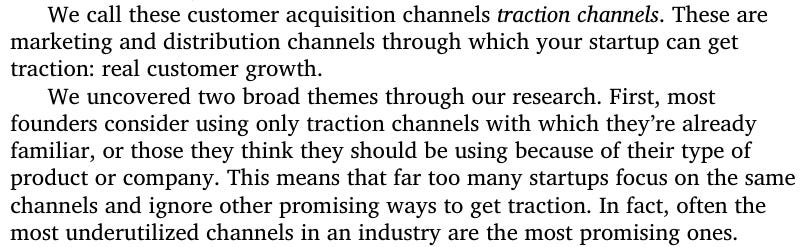
The most underutilized channels are the most promising ones for getting traction:
Obviously channels cannot be predicted but must be tested and iterated upon:

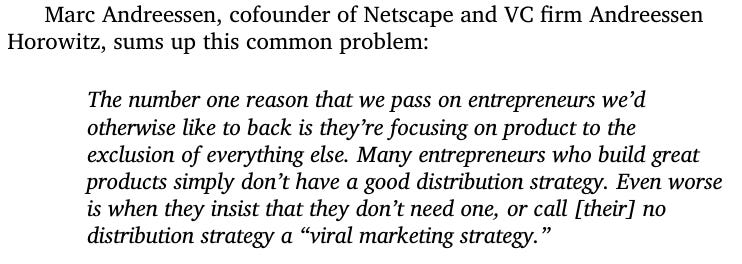
It’s foolish not to have a traction strategy:
Product and traction experimentation should go in parallel:

Split attention 50/50 - 50% on product building, 50% on traction:

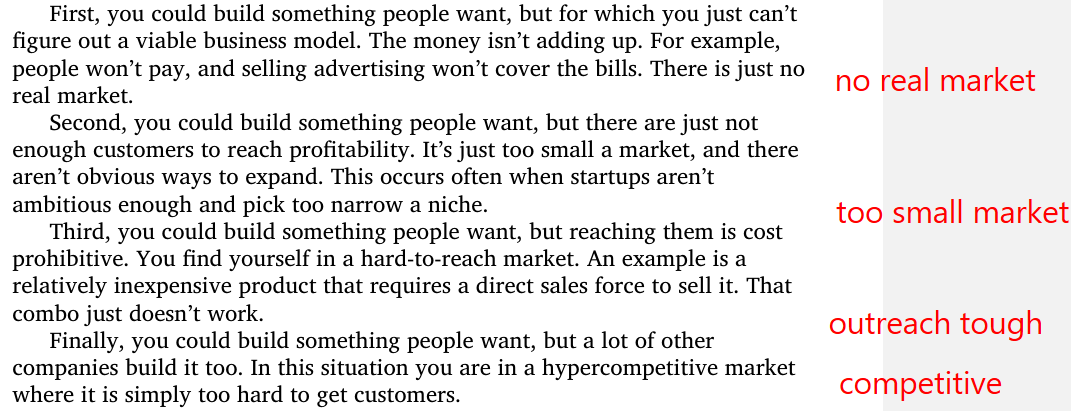
4 Failure modes despite building something people may want
Traction is because you want cold customers - who will highlight the real issues to you:

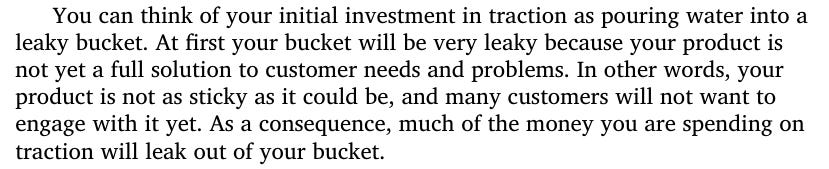
Traction is about starting with a very leaky bucket and then plugging the holes over time:
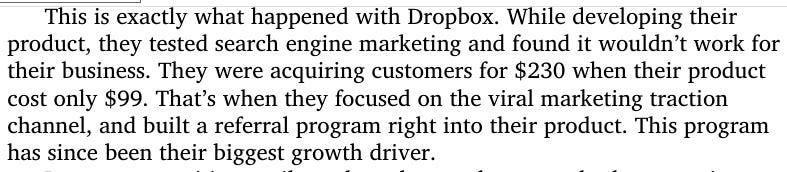
Dropbox grew due to referral channel - SEO wasn’t working great for them due to the high acquisition costs:
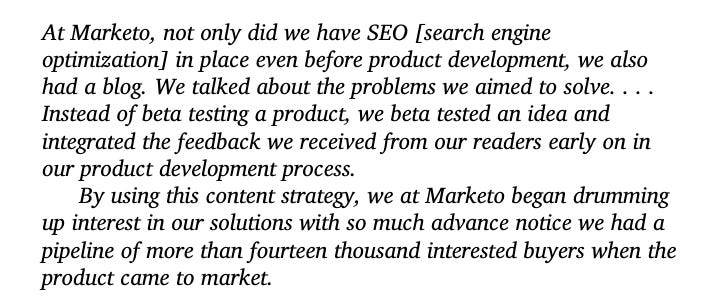
It’s not a bad idea to start with some content, and testing various channels first, rather than immediately start product development:
Over time the leaky bucket should get less leaky; you’re sending in the customers to figure out where the leaks are:

The 3 goals of the 3 phases:
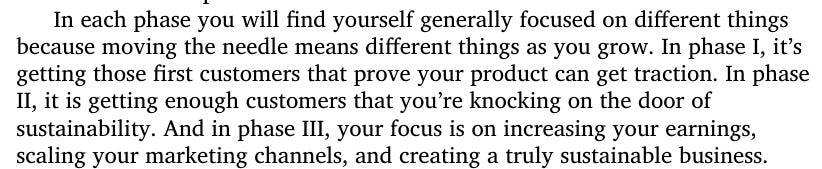
For each new traction channel - the demands and expectations tend to go up:
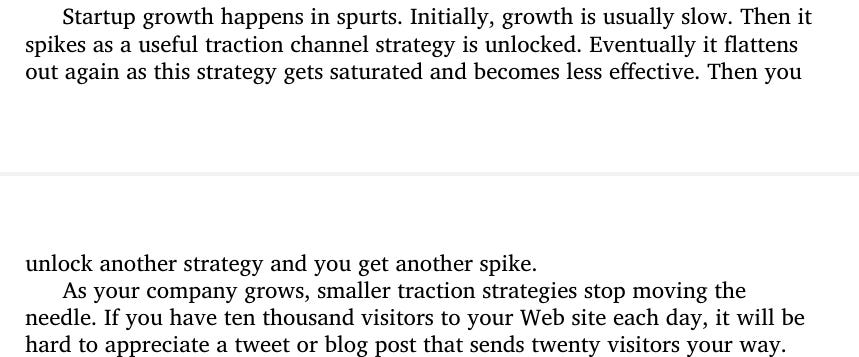
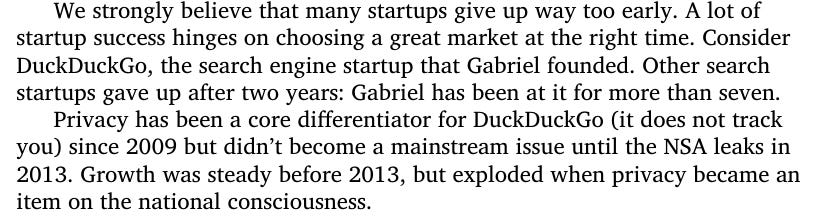
Stay in the game long enough to get lucky - Gabriel stuck around for 7 years to get real growth:
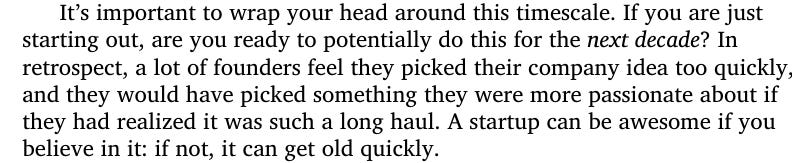
A startup is awesome only if you believe in it:
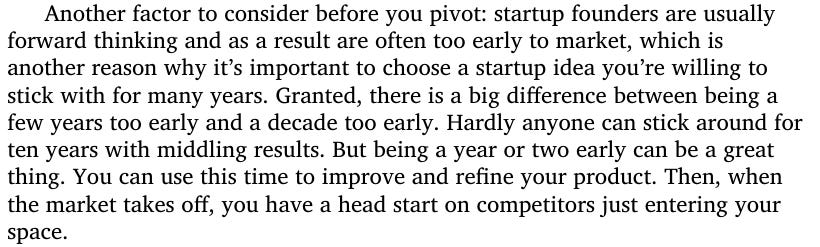
About timing:
Looking for bright spots is important - DDG figured out privacy is the thing 1 year in after observing the market:
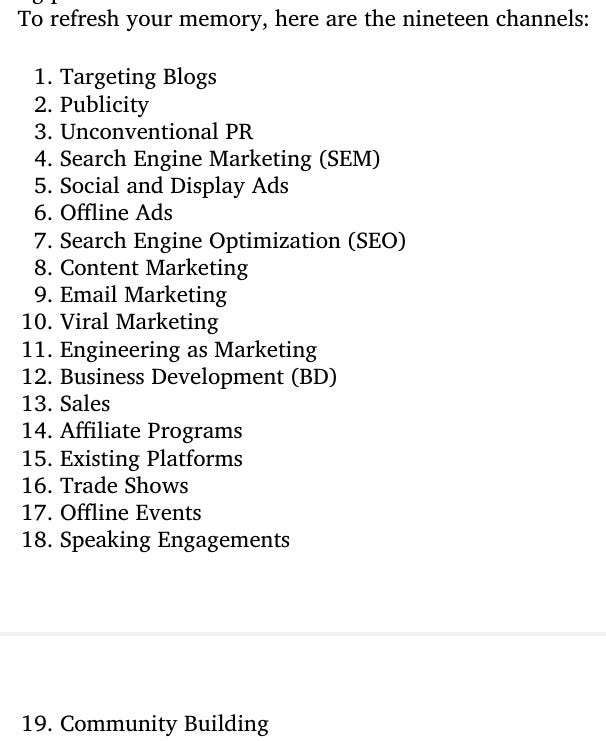
The point of the framework is to get to The One Channel. It is very important to hone in on one - via rapid testing (outer ring - 19 options), in depth testing (middle ring - 3-4 options), and finally singular focus on a channel (1 option):
The value of underutilized channels:
“Traction Innovation” in itself is a big topic - as big as “Product Innovation’. So - innovation is needed in both the sides:
Have primary thing - then make everything else boost it:
Pick up and master traction related tools:
Track these numbers:

The numbers will help you figure out what will truly move the needle for you:
Have traction milestones and keep things focused until you hit them:
The 19 traction channels for reference:
Realize that founders tend to have biases against certain channels and this could be detrimental to business:
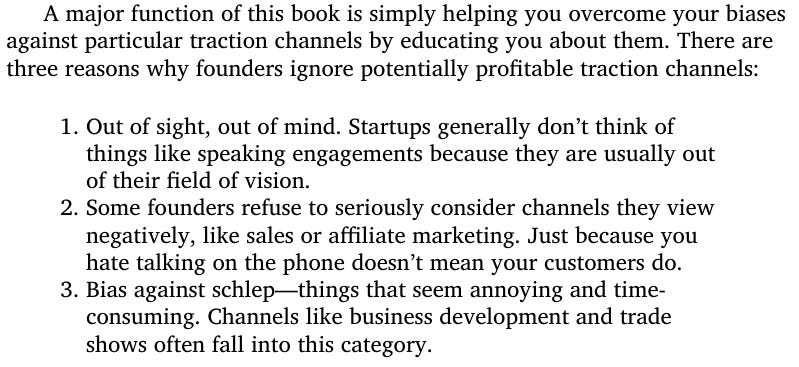
Many times the competition may not even give a channel a try and progress can be made there: